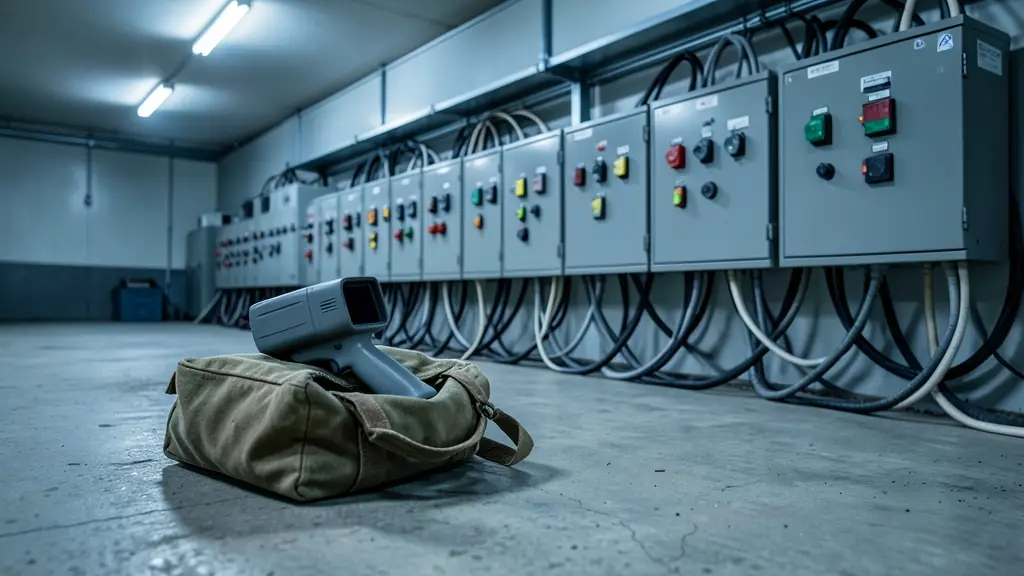
A thermal camera turns heat into a picture, so you see a hot breaker, a damp patch, a blocked radiator or a failing bearing at a glance instead of checking one spot at a time. Electricians, maintenance teams, HVAC technicians, solar installers, home inspectors, vets and search teams all use them. Prices run from phone attachments to cameras that cost as much as a bakkie, and the specifications decide what you can actually see. This page explains resolution, sensitivity, lenses and the features that matter. Send one request and suppliers near you quote you directly.
Resolution and sensitivity
Most cameras use an uncooled microbolometer sensor. Common resolutions are 80 x 60, 160 x 120, 256 x 192, 320 x 240, 384 x 288 and 640 x 480. More pixels let you see smaller faults from further away and measure them properly: a loose lug at the back of a board needs several pixels on it, not one. Thermal sensitivity (NETD), given in mK, is the smallest temperature difference the camera can show; lower is better, and under 50 to 100 mK is common. Good sensitivity matters for buildings and damp, where differences are small. Some cameras blend a normal photo with the thermal one so you can see what you are looking at.
Lens, focus and radiometric measurement
The field of view sets how much fits in the picture. A wide lens suits rooms, boards and close work; a narrow one suits overhead lines, roofs and distant targets. Focus-free cameras are simple but soft up close; manual or laser-assisted focus gives sharper pictures and better readings. Radiometric cameras store a temperature for every pixel, so you can measure any point later in the software; non-radiometric ones only show a picture. For reports to insurers or clients, radiometric is the usual choice. Emissivity and reflections matter as much as with any infrared thermometer.
Phone attachments and entry cameras
Plug-in cameras for USB-C or Lightning phones are a cheap way in, and searches for a "thermal camera for android" are common. They suit homeowners, hobbyists and quick checks, usually at lower resolution and with fewer measurement tools. Entry handheld cameras add a tougher body and a trigger. For regular professional work, a dedicated camera with a decent sensor, a good battery and report software saves time.
What drives the price, and other routes
Price follows resolution, sensitivity, lenses, focus, temperature range, the screen, video and app features, the software and the warranty. Compare the same specs: comparing a 160 x 120 camera with a 640 x 480 one is comparing different tools. For a one-off job, hire a camera; to have it done for you, ask for an electrical thermography survey or a building inspection; and to use one well, look at training.
What to put in your request
- What you will inspect: boards, motors, roofs, solar or other
- How far you usually stand from the target
- The resolution you have in mind, if any
- Whether you need radiometric reports for clients
- Training, software or a carry case you want included
Thermal Imaging Cameras for industry, food, health, labs and homes
- Factories, mines and plants: switchgear, motors, bearings, steam traps and kiln shells scanned on maintenance rounds
- Kitchens, butcheries and food factories: ovens, cold room panels, door seals and conveyor motors checked in food factories
- Hospitals, clinics and pharmacies: plant rooms, boards and cold rooms in hospitals checked by the maintenance team
- Electricians, HVAC and refrigeration technicians: boards, solar arrays, HVAC ducts and underfloor heating checked on call-outs
- Labs, schools and universities: heat flow experiments, circuit boards and equipment testing at universities and schools
- Cold stores and distributors: cold room panels, door seals and refrigeration plant checked for heat leaks
- Farms, poultry houses and packhouses: brooders, pump motors, haystacks and animal health checks done by farmers and vets
- Households and families: damp, roof leaks, draughts and geyser pipes found around the house
- Property managers, inspectors and security: pre-purchase inspections, roof leaks and electrical boards checked across portfolios
Frequently asked questions
Do you sell thermal cameras?
No. We pass your request to independent suppliers, hire companies and thermographers who work in your area, and they quote you directly. We do not sell or inspect anything ourselves. See how it works.
Can a thermal camera see through walls?
No. It sees the surface temperature of the wall. A hot pipe, a leak or missing insulation shows only because it warms or cools that surface. It also cannot see through glass, which reflects heat like a mirror.
Which brand should I buy?
We do not name brands. The well-known makers all offer a range from entry to high-end. Compare resolution, NETD, lens, focus, whether it is radiometric, the software and the local warranty and repair support, and ask the supplier for the data sheet.
What resolution do I need for electrical work?
Many electricians start at 160 x 120 or above for boards they can stand close to. For large switchgear, overhead work or reports to insurers, higher resolutions such as 320 x 240 or 640 x 480 make small faults easier to see and measure. Ask your insurer or client what they expect.
Thermal Imaging Cameras by province and city
- Johannesburg
- Pretoria
- Centurion
- Midrand
- Sandton
- Randburg
- Roodepoort
- Krugersdorp
- Randfontein
- Germiston
- Boksburg
- Benoni
- Kempton Park
- Alberton
- Vanderbijlpark
- Vereeniging
- Durban
- Pinetown
- Pietermaritzburg
- Richards Bay
- Newcastle
- Ladysmith
- Gqeberha (Port Elizabeth)
- East London
- Kariega (Uitenhage)
- Mthatha
- Cape Town
- Bellville
- Paarl
- Stellenbosch
- George
- Worcester
- eMalahleni (Witbank)
- Middelburg
- Secunda
- Mbombela (Nelspruit)
- Rustenburg
- Brits
- Klerksdorp
- Potchefstroom
- Mahikeng
- Polokwane
- Tzaneen
- Kimberley
- Upington
- Bloemfontein
- Welkom
- Sasolburg