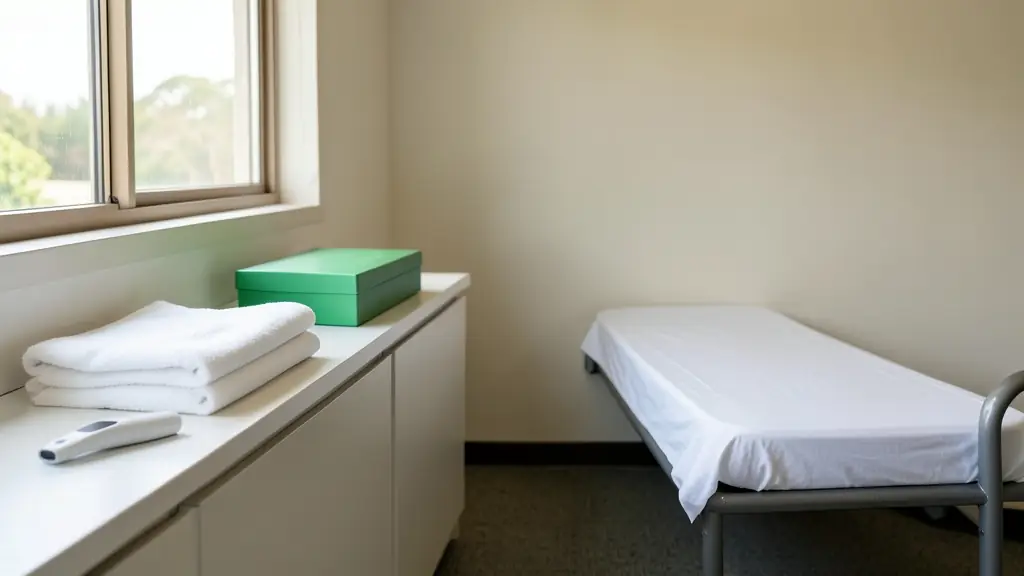
A non contact thermometer for people reads the skin at the forehead or temple and estimates body temperature in about a second, without touching anyone. Clinics, pharmacies, schools, crèches, care homes, workplaces and parents use them because they are quick, quiet and hygienic, and a sleeping child does not need to be woken. They are not the same as an industrial temperature gun, and they have real limits. This page explains how to choose one, what upsets the reading and what to ask the supplier. Send one request and suppliers near you quote you directly.
How they work
The sensor reads infrared from the skin, then the thermometer applies a correction to estimate body temperature, because skin is cooler than the inside of the body. That correction is what makes it a clinical device. An industrial gun pointed at a forehead shows only the skin surface, which is why it reads low and should not be used on people. Some models also have a surface or object mode for bath water and bottles, and some double as ear thermometers with a cap. Normal body temperature is around 37 °C and varies by person, time of day and where it is measured.
What upsets the reading
- Sweat, a wet face or make-up on the forehead.
- Sun, wind or a cold walk in from outside: let the person sit indoors for a while first.
- Hair, a cap or a headband over the spot.
- Holding it at the wrong distance, or moving it from a cold car into a warm room and using it straight away.
- Flat batteries and a dirty sensor window.
Follow the distance and method in the manual, and take two or three readings. A raised reading is usually checked with a contact clinical thermometer, see medical thermometers. A reading is not a diagnosis: when to see a doctor is the doctor's or clinic's call.
Screening at entrances
Entrance screening was widespread during COVID-19 and some clinics, schools and workplaces still do it. For a busy door, a fast handheld with a memory and a fever alert colour helps, and some sites use wall-mounted or stand-mounted units. Screening finds some raised temperatures; it misses people with no fever and can flag people who simply walked in from the sun. Your own policy, and the Department of Health's guidance where it applies, decide what happens next.
What to ask the supplier
Clinical thermometers are medical devices. Ask whether the product is listed with SAHPRA (the South African Health Products Regulatory Authority) and whether it has a clinical accuracy claim on its data sheet, not just a box that says medical. Ask about warranty, batteries, cleaning and whether it can be checked or calibrated; see calibration. Buying for many sites? See bulk supply.
What to put in your request
- Who it is for: clinic, school, workplace or home
- How many thermometers you need
- Handheld, wall-mounted or on a stand
- Whether you need SAHPRA listing confirmed
- Spare batteries, covers or a dual ear mode
Forehead and Non-Contact Thermometers for industry, food, health, labs and homes
- Factories, mines and plants: checks at the gate or clinic on mines, plants and large sites where a policy needs one
- Kitchens, butcheries and food factories: staff checks at the start of a shift in food factories where the site policy calls for it
- Hospitals, clinics and pharmacies: quick checks in clinics, pharmacies, care homes and doctors' rooms before a contact reading
- Electricians, HVAC and refrigeration technicians: first aid kits on large construction and installation sites
- Labs, schools and universities: visitor and staff checks at laboratories and research stations with health policies
- Cold stores and distributors: checks for drivers and warehouse shifts where a company policy asks for them
- Farms, poultry houses and packhouses: first aid boxes on farms far from a clinic, for a quick first check
- Households and families: quick checks on sleeping children and family members without waking or touching them
- Property managers, inspectors and security: entrance checks at offices, estates and venues that still screen visitors
Frequently asked questions
Do you sell forehead thermometers?
No. We pass your request to independent suppliers who work in your area, and they quote you directly. We do not sell medical devices and give no medical advice. More on how it works.
Are forehead thermometers accurate for babies?
Many parents use them for a quick check, and some models are made for infants. Accuracy depends on the device and how it is used, so read its data sheet and manual. Many doctors and clinics prefer a contact or rectal reading for very young babies: ask your clinic what they want you to use.
Why do I get different readings one after another?
Small changes in distance, angle and the spot on the forehead, plus sweat or a draught, all move the reading. Hold it the way the manual says, wait a few seconds between reads and take the middle of three. If readings jump a lot, check the batteries and clean the sensor.
Can I use one on surfaces too?
Only if it has an object or surface mode, and even then it suits bath water or a bottle, not a kitchen or workshop. For surfaces, a temperature gun is the right tool.
Forehead and Non-Contact Thermometers by province and city
- Johannesburg
- Pretoria
- Centurion
- Midrand
- Sandton
- Randburg
- Roodepoort
- Krugersdorp
- Randfontein
- Germiston
- Boksburg
- Benoni
- Kempton Park
- Alberton
- Vanderbijlpark
- Vereeniging
- Durban
- Pinetown
- Pietermaritzburg
- Richards Bay
- Newcastle
- Ladysmith
- Gqeberha (Port Elizabeth)
- East London
- Kariega (Uitenhage)
- Mthatha
- Cape Town
- Bellville
- Paarl
- Stellenbosch
- George
- Worcester
- eMalahleni (Witbank)
- Middelburg
- Secunda
- Mbombela (Nelspruit)
- Rustenburg
- Brits
- Klerksdorp
- Potchefstroom
- Mahikeng
- Polokwane
- Tzaneen
- Kimberley
- Upington
- Bloemfontein
- Welkom
- Sasolburg