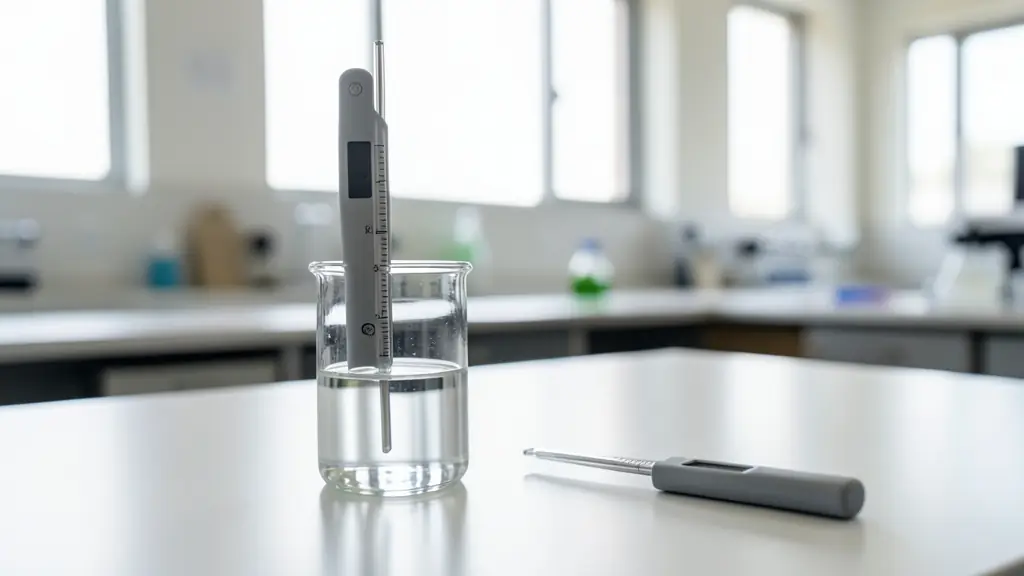
A digital thermometer is the everyday contact thermometer: a probe or stick that touches or sits in what you are measuring, with a small display that shows the temperature. Unlike an infrared gun, it reads the inside of a liquid, the soil a few centimetres down or the air in a room, not just a surface. They are used for water, pools, aquariums, compost, soil, school and lab work, workshops and wash-down areas. This page covers the kinds, what the numbers mean and what to ask for. Send one request and suppliers who deliver to you quote directly.
The kinds of thermometer and when each fits
- Stick and pen thermometers with a fixed probe: general use, liquids, lab and school work.
- Probe thermometers on a cable: the display stays outside while the probe sits in a tank, oven, soil or a pipe.
- Floating pool and pond thermometers and stick-on aquarium thermometers for a quick glance at the water.
- Soil and compost thermometers with long, strong stems.
- Dual-probe and room thermometers that show inside and outside, often with min/max memory.
For surfaces you cannot touch, see infrared thermometers. For kitchens, see food thermometers.
Resolution is not accuracy
Many digital thermometers show 0.1 °C steps. That is the resolution, how finely the display can show a change. The accuracy, how close the reading is to the true temperature, is a separate figure on the maker's data sheet, usually given as plus or minus a number over a stated range. A cheap thermometer can show one decimal place and still be out by a degree or more. If the reading matters for an audit or a lab result, ask for the data sheet and a calibration certificate, and see thermometer calibration.
Waterproofing, features and probes
For wash-down areas, pools and outdoor work, look for a rated case such as IP65 (splashes and jets) or IP67 (short dunking). Useful features include hold, min/max memory, high and low alarms, a backlight and auto switch-off to save the battery. Check the probe length and tip: thin tips respond faster, long stems reach into soil or deep tanks. Some models take plug-in thermocouples or PT100 probes for higher heat or better accuracy.
Glass and mercury thermometers
Glass thermometers are still found in labs, schools and old equipment. Mercury thermometers are being phased out under the Minamata Convention on Mercury, so many buyers now replace them with digital models or spirit-filled glass. If a mercury thermometer breaks, follow your workplace or school procedure for the spill rather than sweeping it up with a vacuum cleaner. When you replace glass with digital, check the new probe's range covers the old scale, and keep one reference thermometer aside for comparing the others now and then.
What to put in your request
- What you will measure: water, air, soil or a lab sample
- The temperature range you need
- The probe length and whether it is on a cable
- Waterproof rating, alarms or min/max memory
- How many, and whether certificates are needed
Digital Thermometers for industry, food, health, labs and homes
- Factories, mines and plants: probe thermometers for tanks, wash water, coolant and process liquids on the floor
- Kitchens, butcheries and food factories: general probe checks of water baths, wash water and liquids in kitchens
- Hospitals, clinics and pharmacies: room and water thermometers in clinics, sterilising areas and care homes
- Electricians, HVAC and refrigeration technicians: probe thermometers for plumbers and pool installers checking water and pipe temperatures
- Labs, schools and universities: stick thermometers for practicals, water baths and sample checks in labs and schools
- Cold stores and distributors: probe thermometers for spot checks of product and air in stores
- Farms, poultry houses and packhouses: soil, compost, dam and borehole water checks on farms and in nurseries
- Households and families: pool, aquarium, room and garden thermometers around the house
- Property managers, inspectors and security: water and room temperature checks by managers of estates and buildings
Frequently asked questions
Do you sell digital thermometers yourselves?
What kind of thermometer do I need for a swimming pool?
How can I check if my digital thermometer is reading correctly?
Can I buy digital thermometers in bulk for a school or lab?
Digital Thermometers by province and city
- Johannesburg
- Pretoria
- Centurion
- Midrand
- Sandton
- Randburg
- Roodepoort
- Krugersdorp
- Randfontein
- Germiston
- Boksburg
- Benoni
- Kempton Park
- Alberton
- Vanderbijlpark
- Vereeniging
- Durban
- Pinetown
- Pietermaritzburg
- Richards Bay
- Newcastle
- Ladysmith
- Gqeberha (Port Elizabeth)
- East London
- Kariega (Uitenhage)
- Mthatha
- Cape Town
- Bellville
- Paarl
- Stellenbosch
- George
- Worcester
- eMalahleni (Witbank)
- Middelburg
- Secunda
- Mbombela (Nelspruit)
- Rustenburg
- Brits
- Klerksdorp
- Potchefstroom
- Mahikeng
- Polokwane
- Tzaneen
- Kimberley
- Upington
- Bloemfontein
- Welkom
- Sasolburg