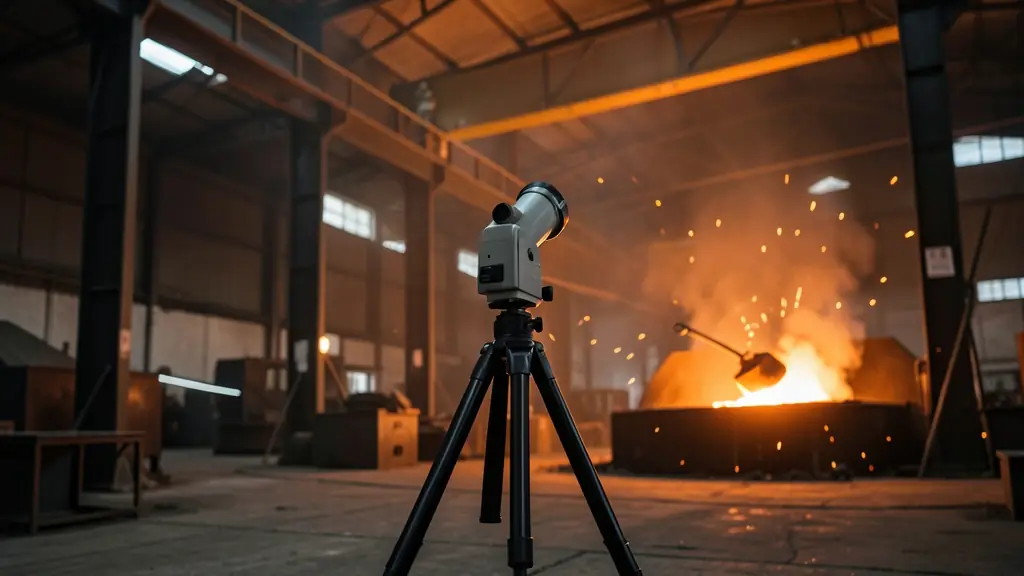
A pyrometer is an infrared thermometer built for serious heat: molten iron and steel, forging billets, glass gobs, ceramic and cement kilns, heat treatment furnaces and boilers. Many read to about 1,800 °C and some much higher, from far enough away to keep you out of the radiant heat. They differ from a kitchen temperature gun in wavelength, optics and toughness, and the right one depends on the material, the distance and what is in the air between. This page explains the choices. Send one request and suppliers and instrument specialists near you quote you directly.
Where pyrometers are used
Foundries in Benoni and Germiston check pouring temperatures; steel works and rolling mills follow billets and strip; glass plants watch gobs and moulds; cement and lime kilns measure the shell and the burning zone; brickworks and potters check kilns; heat treatment and forging shops confirm parts reach the right heat before quenching. Power stations and boiler houses use them on burners and tubes. Many plants carry handheld units on rounds and have fixed sensors on the line for control.
Wavelength and two-colour models
The wavelength a pyrometer works at changes how it behaves. Short-wavelength models suit hot metals, which have a low and changing emissivity: the error from a wrong setting is smaller at short wavelengths. Longer wavelengths suit cooler, non-metal targets. Glass needs a wavelength the glass does not pass. Two-colour (ratio) pyrometers compare two wavelengths, so they cope better with dust, smoke, steam, a dirty window and a target smaller than the spot, as long as both wavelengths are dimmed equally. They cost more and are common on steel and in dusty kilns. Ask the supplier which suits your material and give them the temperature band you care about most.
Optics, sighting and distance
Pyrometers often have high distance to spot ratios, sometimes over 100:1, so a small spot can be read from several metres. A through-the-lens sighting scope or a video sight shows exactly what you are measuring, which a laser cannot do against a bright glow. Some heads focus at a set distance, so the spot is smallest there. Check the spot size at your real working distance, not the best figure on the sheet.
Handheld or fixed, and protecting it
Handheld units suit rounds, spot checks and several furnaces. Fixed heads give a continuous 4 to 20 mA or digital signal to a controller. Near a furnace, a fixed head usually needs a water or air cooling jacket, an air purge to keep dust off the lens, and sometimes a fibre optic head so the electronics sit further away. Plan for a calibration check against a high-temperature blackbody; see calibration. For a picture of a whole kiln shell, a thermal camera may suit better.
What to put in your request
- The material: molten metal, steel, glass, kiln or other
- The temperature band you need most
- How far you stand from the target and its size
- Dust, smoke, steam or a window in the way
- Handheld or fixed, and the signal you need
Pyrometers for industry, food, health, labs and homes
- Factories, mines and plants: ladles, billets, rolling strip, kiln shells and furnace doors read from a safe distance
- Kitchens, butcheries and food factories: large baking ovens and roasting drums checked where very high heat is involved
- Hospitals, clinics and pharmacies: incinerators at hospitals checked for burn temperatures on rounds
- Electricians, HVAC and refrigeration technicians: forging, blacksmith and heat treatment work checked before quenching
- Labs, schools and universities: materials testing furnaces and high-temperature research rigs measured without contact
- Cold stores and distributors: rarely needed: cold chain work uses probes, guns and loggers instead
- Farms, poultry houses and packhouses: boilers, biomass burners and charcoal kilns checked on larger farms
- Households and families: pottery kilns and hobby forges checked by keen makers at home
- Property managers, inspectors and security: boiler and incinerator plant in large buildings checked on maintenance rounds
Frequently asked questions
Do you supply pyrometers yourselves?
No. We pass your request to independent suppliers and instrument specialists who work in your area, and they quote you directly. We do not sell, install or calibrate pyrometers, and we give no process or safety advice. See how it works.
Can I use a high-range temperature gun instead?
For an occasional check on a kiln door or an exhaust, sometimes. For molten metal, glowing steel or precise process work, a general gun's wavelength, optics and emissivity handling usually fall short. Ask the supplier for a data sheet that covers your material and temperature.
What emissivity do I set for molten metal?
It depends on the metal, its surface, slag and oxide, and the wavelength of your pyrometer. Makers publish tables, and many plants set the value by comparing against a dip thermocouple in the same melt. A two-colour model is less sensitive to it.
How often should a pyrometer be calibrated?
Your own quality system sets the interval, and yearly is common. A lab checks it against a blackbody source at points near your working range and issues a certificate. Recalibrate after a knock, a repair or any reading that disagrees with a dip check.
Pyrometers by province and city
- Johannesburg
- Pretoria
- Centurion
- Midrand
- Sandton
- Randburg
- Roodepoort
- Krugersdorp
- Randfontein
- Germiston
- Boksburg
- Benoni
- Kempton Park
- Alberton
- Vanderbijlpark
- Vereeniging
- Durban
- Pinetown
- Pietermaritzburg
- Richards Bay
- Newcastle
- Ladysmith
- Gqeberha (Port Elizabeth)
- East London
- Kariega (Uitenhage)
- Mthatha
- Cape Town
- Bellville
- Paarl
- Stellenbosch
- George
- Worcester
- eMalahleni (Witbank)
- Middelburg
- Secunda
- Mbombela (Nelspruit)
- Rustenburg
- Brits
- Klerksdorp
- Potchefstroom
- Mahikeng
- Polokwane
- Tzaneen
- Kimberley
- Upington
- Bloemfontein
- Welkom
- Sasolburg