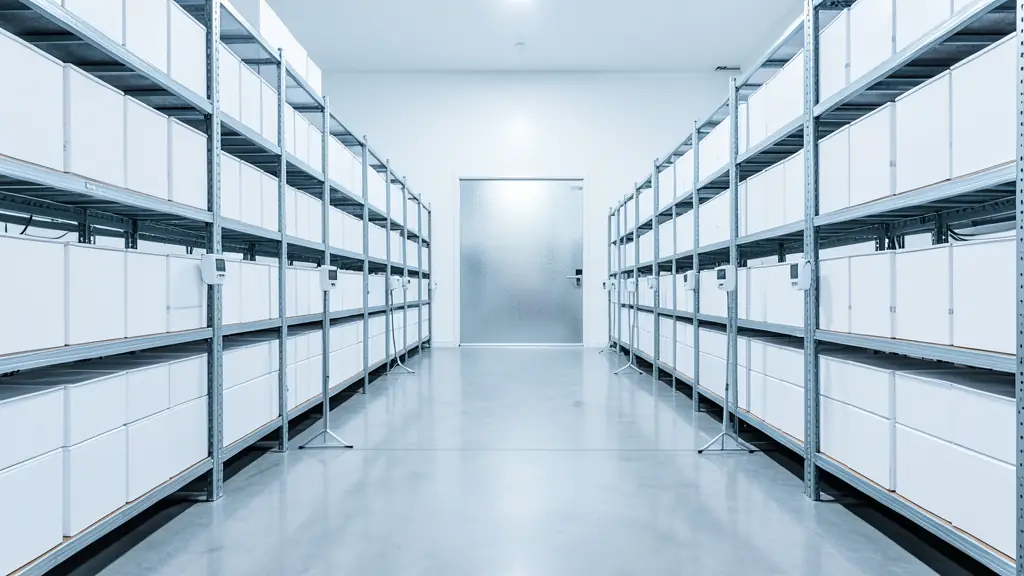
The thermometer by the door of a cold room tells you about one spot. The top shelf near the evaporator, the floor by the door and the back corner can all be different, and in summer they can drift out of range. Temperature mapping places calibrated data loggers in a grid through a cold room, warehouse, freezer, vaccine fridge or reefer truck for a set period, to find the hot and cold spots, so you store stock only where it stays in range. Send one request and independent mapping and validation companies quote you directly.
Who needs a mapping study
Mapping is expected for medicines under good distribution and storage practice, so pharmaceutical wholesalers, hospital pharmacies, clinics with vaccine fridges and third-party logistics stores are the usual clients. The WHO guidance on temperature mapping of storage areas describes how it is commonly done. Food distributors, cold stores and supermarket chains also map rooms when a customer or an audit asks, or after spoiled stock. If your rooms hold product with a set storage range, such as 2 to 8 °C or 15 to 25 °C, a map shows whether the whole room meets it.
How a study is done
The company agrees a protocol with you first: the area, the number and position of loggers, the logging interval, how long the study runs and what counts as a pass. Data loggers with current calibration certificates go in a three-dimensional grid, at different heights, near doors, evaporators, lights and outside walls, and beside your fixed monitoring sensors. They log through normal use, often for days, sometimes with tests such as a door left open or a power cut to see how fast the room warms. The loggers are then collected and the data analysed.
What the report gives you
Expect a layout of where each logger was, graphs and tables of the results, the highest and lowest readings and when they happened, and any spots that left the range. The report should recommend where to store stock and where not to, where to put your permanent monitoring sensors and alarms, and changes such as moving a pallet rack, fixing a door seal or improving the air flow. Keep it with your quality records: inspectors and customers often ask to see it, with proof that the loggers were calibrated.
Summer, winter and when to repeat
A room that is fine in July can fail in January. Many sites map in both summer and winter, because outside heat, door traffic and defrost cycles change with the season. Studies are usually repeated after changes: a new cooling unit, a new racking layout, a bigger door, a move to a new building or a failed result. Rooms are often requalified on a schedule set by your quality system. Between studies, continuous monitoring with alarms and fridge thermometers shows whether the room stays where the map said it would.
What to put in your request
- What you store and the range it must stay in
- The size, height and racking of each room
- How many rooms, fridges or trucks need mapping
- Summer study, winter study or both
- Whether your quality team already has a protocol
Temperature Mapping Studies for industry, food, health, labs and homes
- Factories, mines and plants: raw material and finished stock stores mapped where heat affects quality
- Kitchens, butcheries and food factories: cold rooms, freezers and dispatch areas mapped for a retailer or food safety audit
- Hospitals, clinics and pharmacies: hospital pharmacy stores and clinic vaccine fridges mapped to show they hold 2 to 8 °C
- Electricians, HVAC and refrigeration technicians: refrigeration contractors using a map to show a new cold room performs
- Labs, schools and universities: sample stores, incubators and reagent fridges mapped for lab quality records
- Cold stores and distributors: pharmaceutical warehouses, cold stores and reefer trucks mapped each season
- Farms, poultry houses and packhouses: vaccine fridges, packhouse cold rooms and fruit stores mapped before export season
- Households and families: rarely needed at home, though a home business fridge can be checked with one logger
- Property managers, inspectors and security: landlords of cold stores and warehouses showing tenants a mapped space
Frequently asked questions
How many loggers does a study need?
Can I map a room myself with my own loggers?
Can reefer trucks and vaccine fridges be mapped too?
Do you carry out mapping studies yourselves?
Temperature Mapping Studies by province and city
- Johannesburg
- Pretoria
- Centurion
- Midrand
- Sandton
- Randburg
- Roodepoort
- Krugersdorp
- Randfontein
- Germiston
- Boksburg
- Benoni
- Kempton Park
- Alberton
- Vanderbijlpark
- Vereeniging
- Durban
- Pinetown
- Pietermaritzburg
- Richards Bay
- Newcastle
- Ladysmith
- Gqeberha (Port Elizabeth)
- East London
- Kariega (Uitenhage)
- Mthatha
- Cape Town
- Bellville
- Paarl
- Stellenbosch
- George
- Worcester
- eMalahleni (Witbank)
- Middelburg
- Secunda
- Mbombela (Nelspruit)
- Rustenburg
- Brits
- Klerksdorp
- Potchefstroom
- Mahikeng
- Polokwane
- Tzaneen
- Kimberley
- Upington
- Bloemfontein
- Welkom
- Sasolburg