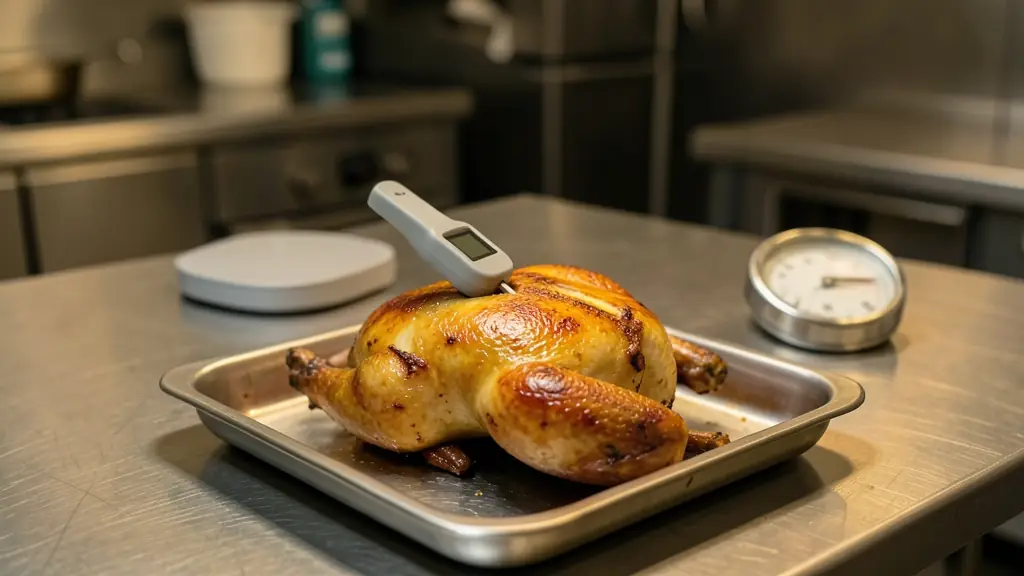
A food thermometer takes the guesswork out of cooking, cooling and holding food. Restaurants, caterers, butcheries, bakeries and food factories use probe thermometers for their daily temperature records, and home cooks use them for roasts, bread, sweets and the braai. The kinds range from a simple instant-read probe to wireless probes that stay in the oven, candy and deep-fry thermometers and infrared guns for surface checks. This page explains them and what to ask for. Send one request and suppliers in your area quote you directly.
The kinds of food thermometer
- Instant-read and folding probes: the kitchen workhorse for core checks, with a thin tip that reads in seconds.
- Wireless and Bluetooth probes that stay in the meat in the oven, smoker or on the braai and send the reading to a base or phone.
- Oven thermometers that sit on the rack to show the real oven heat.
- Candy and deep-fry thermometers that clip to the pot for sugar work and oil.
- Infrared guns for surfaces such as griddles, pizza stones and incoming deliveries, never the core; see temperature guns.
R638, HACCP and your records
In South Africa, Regulation R638 (the general hygiene requirements for food premises, under the Foodstuffs, Cosmetics and Disinfectants Act) requires food premises to keep food at safe temperatures, and HACCP plans record temperatures at critical points. Commonly used targets are chilled food at or below 5 °C, frozen food at about -18 °C, hot holding at or above about 60 to 65 °C and reheated food to a core of about 75 °C. These are commonly used figures, not a ruling: check your own food safety plan and your environmental health practitioner. For fridges and cold rooms, see fridge and freezer thermometers.
Checking a probe in ice and boiling water
Many kitchens check their probes regularly. Stir a glass packed with crushed ice and a little water and the probe should read about 0 °C. Boiling water reads about 100 °C at the coast but lower inland, about 94 to 95 °C in Johannesburg, so allow for altitude. A probe that is well off should be replaced or sent for calibration, which also gives you a certificate for an audit.
What matters in a busy kitchen
Look for a thin, sharp tip that reads quickly, a waterproof body that can be washed, and a probe long enough for large joints and deep pots. Keep probe wipes beside it and clean the tip between raw and cooked food. Colour-coded handles help keep raw and cooked separate. Buy at least one spare, because probes get dropped, bent and left in pockets, and a kitchen without a working probe cannot keep its records. If you need readings logged automatically, see temperature data loggers.
What to put in your request
- The kind: instant-read, wireless, oven or candy
- How many probes and for which areas
- Whether they must be waterproof or colour coded
- Probe length for large joints or deep pots
- Whether you need calibration certificates
Food and Cooking Thermometers for industry, food, health, labs and homes
- Factories, mines and plants: probe checks on cooking, cooling and filling lines in food factories
- Kitchens, butcheries and food factories: core temperature checks and records in restaurants, butcheries, bakeries and caterers
- Hospitals, clinics and pharmacies: probe thermometers in hospital, clinic and care home kitchens
- Electricians, HVAC and refrigeration technicians: probes stocked by catering equipment dealers and kitchen fitters
- Labs, schools and universities: probe checks in food science labs and hospitality schools
- Cold stores and distributors: core checks of incoming chilled and frozen deliveries at receiving bays
- Farms, poultry houses and packhouses: probes for farm butcheries, cheese making and packhouse checks
- Households and families: meat and braai probes, oven thermometers and candy thermometers at home
- Property managers, inspectors and security: probe thermometers for estate restaurants, clubhouses and canteens
Frequently asked questions
Do you sell food thermometers or give food safety rulings?
Can I use an infrared gun to check cooked food?
Where should I put the probe in meat?
How often should a kitchen probe be checked?
Food and Cooking Thermometers by province and city
- Johannesburg
- Pretoria
- Centurion
- Midrand
- Sandton
- Randburg
- Roodepoort
- Krugersdorp
- Randfontein
- Germiston
- Boksburg
- Benoni
- Kempton Park
- Alberton
- Vanderbijlpark
- Vereeniging
- Durban
- Pinetown
- Pietermaritzburg
- Richards Bay
- Newcastle
- Ladysmith
- Gqeberha (Port Elizabeth)
- East London
- Kariega (Uitenhage)
- Mthatha
- Cape Town
- Bellville
- Paarl
- Stellenbosch
- George
- Worcester
- eMalahleni (Witbank)
- Middelburg
- Secunda
- Mbombela (Nelspruit)
- Rustenburg
- Brits
- Klerksdorp
- Potchefstroom
- Mahikeng
- Polokwane
- Tzaneen
- Kimberley
- Upington
- Bloemfontein
- Welkom
- Sasolburg