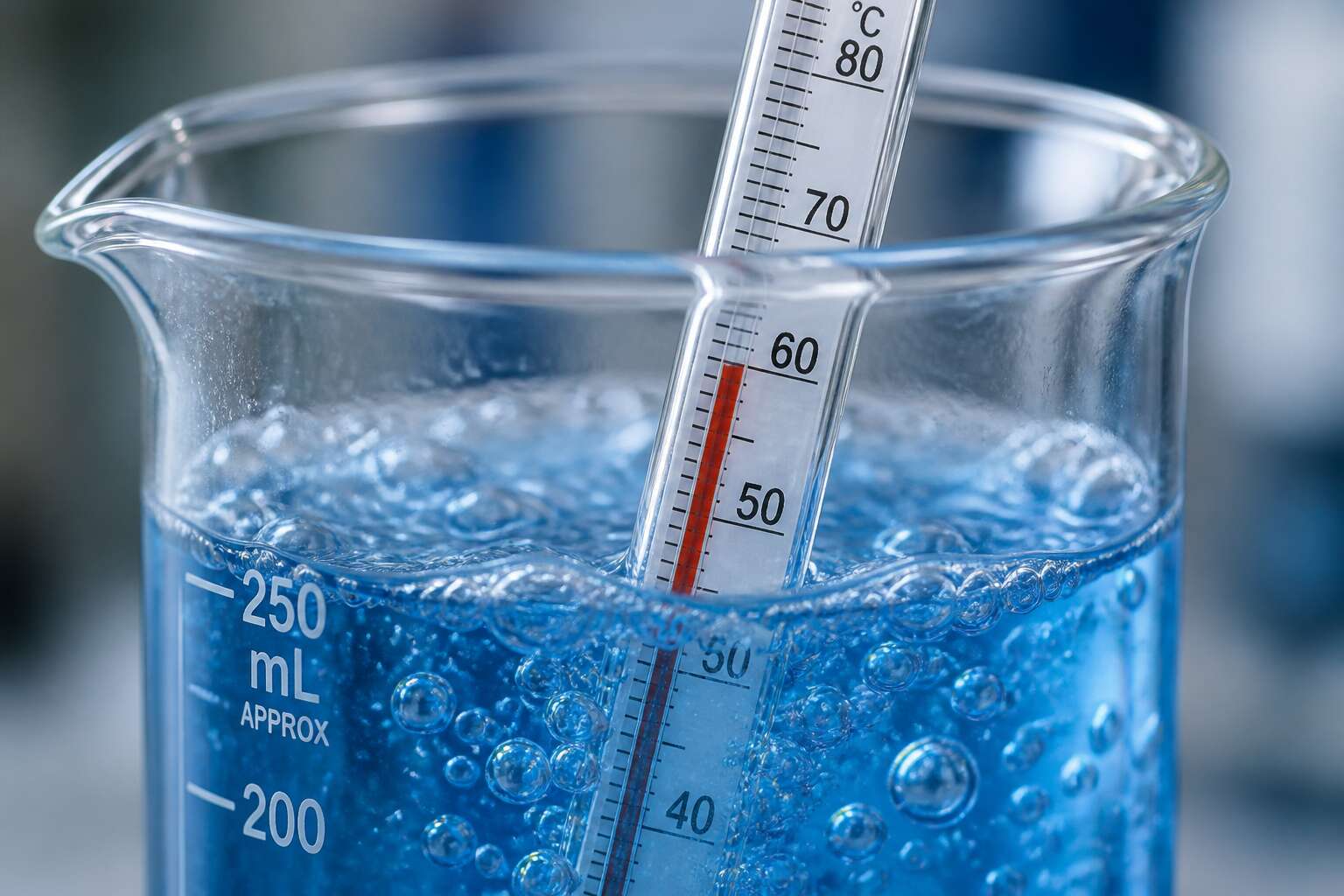
Principles of Liquid-in-Glass Thermometers
Liquid-in-glass thermometers work through thermal expansion, a principle that feels almost alive. Mercury or alcohol sits inside a narrow capillary, waiting for heat. As temperature rises, the liquid stretches upward along the scale. Watching it creep is oddly satisfying!
Three rules keep the reading honest:
- The liquid must expand linearly across the range.
- The capillary bore cannot vary in width.
- The glass must not stretch or contract unevenly.
That simplicity explains how laboratory thermometer works. The liquid climbs until it matches the surrounding heat, then rests. That final position is your answer. No electronics, no noise, only physics holding its breath.
Understanding Temperature Measurement
Temperature underpins countless scientific inquiries, yet its measurement remains an often overlooked skill. When we ask how laboratory thermometer works, we must consider the underlying physical principles. These instruments respond to heat through expansion, electrical resistance, or voltage changes. Each degree marked along the glass or screen reflects calibration against fixed points, the freezing and boiling points of water at standard pressure.
Consider what this means in practice. A single degree can alter a chemical reaction, change a biological sample, or guide a medical diagnosis. That is why understanding how laboratory thermometer works matters for anyone who trusts these readings. The process is methodical:
- Ensure thermal equilibrium between the sensor and its surroundings.
- Read the meniscus at eye level to avoid parallax error.
- Allow sufficient time for the reading to stabilise.
These steps build confidence in every final number.
Components and Construction
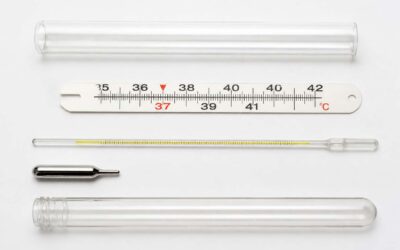
Most people never stop to consider the architecture inside a simple glass tube. Yet understanding the components is essential to grasping how laboratory thermometer works. The bulb at the base holds a reservoir of liquid, typically mercury or dyed alcohol. This bulb is deliberately thin-walled for rapid heat transfer.
From the bulb rises a capillary bore with an incredibly narrow diameter. This is where the precision lives! As temperature rises, the liquid expands and is forced upward through this bore. The narrowness amplifies even tiny volume changes, making the instrument sensitive to fractions of a degree.
Consider the essential parts:
- The stem, which houses the capillary and the graduated scale
- The expansion chamber at the top, a safety buffer against overpressure
- The reference marks, etched or printed onto the stem itself
Each element serves a specific function. Together, they define how laboratory thermometer works, and I find that interplay fascinating.
How to Use a Laboratory Thermometer
Most people assume a thermometer simply measures heat, but the real story is more subtle. The device relies on thermal expansion, where a liquid like mercury or alcohol expands predictably as temperature rises. Understanding how laboratory thermometer works starts with the glass bulb at the bottom, which holds the sensing liquid. When the bulb contacts a sample, heat transfers and the liquid climbs the capillary tube. The scale is calibrated against fixed points, such as the boiling and freezing points of water. I find this process elegant in its simplicity. Here is the typical sequence:
- Immerse the bulb fully without touching the container walls.
- Wait for the reading to stabilise.
Each step demands patience. If you withdraw the thermometer too early, the column drops and the reading becomes meaningless. This direct mechanism has served laboratories for centuries, and it remains reliable even in modern settings.
Calibration and Accuracy
One degree can ruin a reaction. It can mask a pivotal change or trigger a false alarm. Calibration is the only guard against this drift. To grasp how laboratory thermometer works, you have to accept that no device is permanently true.
Accuracy is earned through comparison. A reference standard, certified by a body like SANAS, provides the benchmark. The thermometer’s output is measured against that known value. Thermal shock and routine use slowly shift the internal mechanics.
- Store thermometers away from direct heat
- Check the stem for cracks before each use
- Record the calibration date on the casing
These small habits keep the readings honest. I have seen labs save months of work by respecting this sequence!
Common Applications and Limitations
Understanding how laboratory thermometer works is crucial for accurate readings in South African labs. These devices excel in routine tasks, from checking water baths to monitoring distillation processes. However, they are not perfect. Mercury thermometers fail below freezing, and glass models break easily.
Applications are straightforward:
- Titration experiments
- Environmental testing
- Food quality checks
But limitations arise from physics. Response time lags, especially for bulky sensors. Partial immersion skews results, and parallax can trick your eyes. So, knowing how laboratory thermometer works allows you to avoid those pitfalls. Pick the right range, and always give it time to settle. That patience pays off every single time!

0 Comments