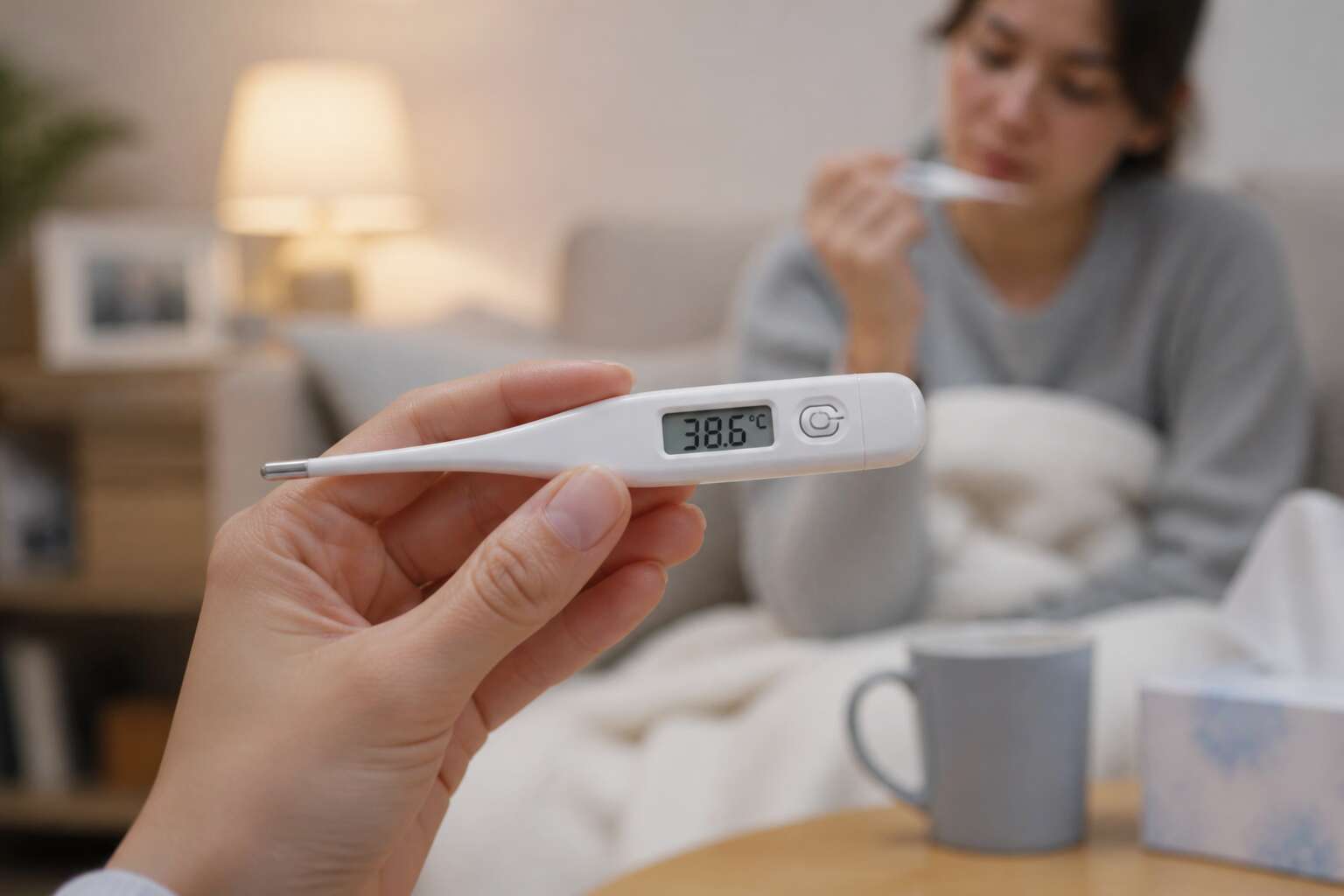
Healthcare Professionals
A fever reading can silence a waiting room faster than any announcement. For healthcare professionals, the thermometer is a constant companion. Ask anyone who uses thermometer during a night shift, and they will describe the instrument with a kind of reverence. It does not gossip, it does not guess. It simply reports.
In South African public clinics, the device often settles disagreements between exhausted nurses and restless queues. A single elevated number grants admission to the doctor. A normal reading sends the patient home with paracetamol and advice. Private practices run on the same logic, though the waiting chairs are softer.
- General practitioners use it to confirm or exclude febrile illness.
- Emergency units depend on it for sepsis screening.
- Paediatricians wield it to calm anxious parents.
The ritual carries a quiet social grace. The nurse aims the sensor, the patient holds still, and both parties accept the verdict without argument. That shared trust is why the thermometer endures, and the roster of who uses thermometer grows longer each year.
Home and Personal Use
Every household has one, usually lurking in a medicine cabinet behind a decade of expired painkillers. That humble device is the first line of defense in the eternal battle against uncertainty. We wait for the beep with bated breath, hoping for a reading under 37 degrees, because that number dictates whether you go to work or back to bed.
For most of us, the device ends up as the family referee. It doesn’t care about your excuses, it just delivers the verdict. This is exactly who uses thermometer in a domestic setting, the designated triage officer.
– The paranoid parent checking a warm forehead after a playdate.
– The competitive sibling proving they are sicker than you to win the TV remote.
– The optimist hoping a fever justifies missing a Monday morning meeting.
These little rituals are quiet, private, and deeply ingrained in our South African homes, especially during the winter flu wave. It’s a small tool with a significant amount of social power. So the next time you feel that familiar tickle in your throat, just remember the device is ready to arbitrate. It is the silent judge, jury, and executioner of your workweek, and we wouldn’t have it any other way, unless the thermostat is broken.
Food and Hospitality Industry
In the bustling kitchens of Cape Town’s finest eateries, the question of who uses thermometer finds its answer in every chef’s hand. I have watched line cooks slide a probe into a roasting joint, their faces intent on that digital readout. It is a quiet ritual, yet it safeguards every plate that leaves the pass.
Food safety audits demand precision. HACCP protocols require documented temperature checks, from cold storage to the heart of a grilled fillet. Without these readings, a single lapse can compromise an entire service.
Consider the daily rhythm of a busy hotel kitchen:
- Morning delivery checks for chilled goods
- Midday cooking temperatures for poultry and mince
- Evening hold temperatures for buffets
Each step relies on the same humble tool. From street food vendors in Durban to five star lodges in the Winelands, the answer to who uses thermometer is anyone who serves food safely.
Industrial and Scientific Applications
Walk into any laboratory and you’ll see why precision matters. Thermometers here are not decorative tools. They validate experiments, ensure sample integrity, and maintain strict regulatory compliance. In industrial settings, the stakes shift to efficiency and safety. When you ask who uses thermometer instruments, the answer spans furnace operators, chemical plant technicians, and pharmaceutical quality control officers.
- Monitoring kiln temperatures during ceramic production
- Verifying cold chain logistics in food processing
- Calibrating equipment in accredited testing facilities
Each setting demands different probes and accuracy levels. The reality of who uses thermometer equipment becomes clear on the factory floor. Some thermometers must survive corrosive chemicals. Others need rapid response times for volatile reactions. I’ve seen how a single faulty reading can halt an entire production line! The choices these professionals make directly affect product quality and worker wellbeing. It’s a quiet responsibility, but an essential one.
Veterinary and Agricultural Sector
The latest African swine fever outbreak in Mpumalanga underscored a brutal reality for commercial piggeries: temperature is the first line of defense. A sick sow can crash from healthy to febrile within hours, and the margin for intervention is painfully thin. For the veterinary practitioner, the thermometer is not a diagnostic endpoint, it is a triage tool. They use it to separate a transient spike from a systemic infection, guiding decisions on whether to isolate an animal or treat the entire pen.
Beyond crisis management, the agricultural sector employs thermometry for predictive herd health. Intensive livestock operations routinely monitor core temperatures to track ovulation cycles in cattle or detect subclinical mastitis before it devastates milk yields. The farmer who understands this tempo knows the daily choreography of their operation depends on reliable readings.
1. Calving and lambing seasons demand hour by hour monitoring for hypothermia in newborns.
2. Feedlot managers use temperature trends to gauge the onset of bovine respiratory disease.
3. Poultry houses rely on environmental thermometers to prevent heat stress, a silent killer.
This data becomes a narrative. A veterinarian returning to a farm reads the logbook of fevers and recoveries to understand if a treatment protocol is failing or flourishing. In a country where livestock represents both livelihood and heritage, the humble thermometer is pivotal. It tells the story of a rumen’s fermentation heat, a mare’s foaling readiness, and the quiet rise of infection that precedes any visible distress. Every reading is a fragment of a larger biological narrative, a whisper of what the animal cannot say.

0 Comments