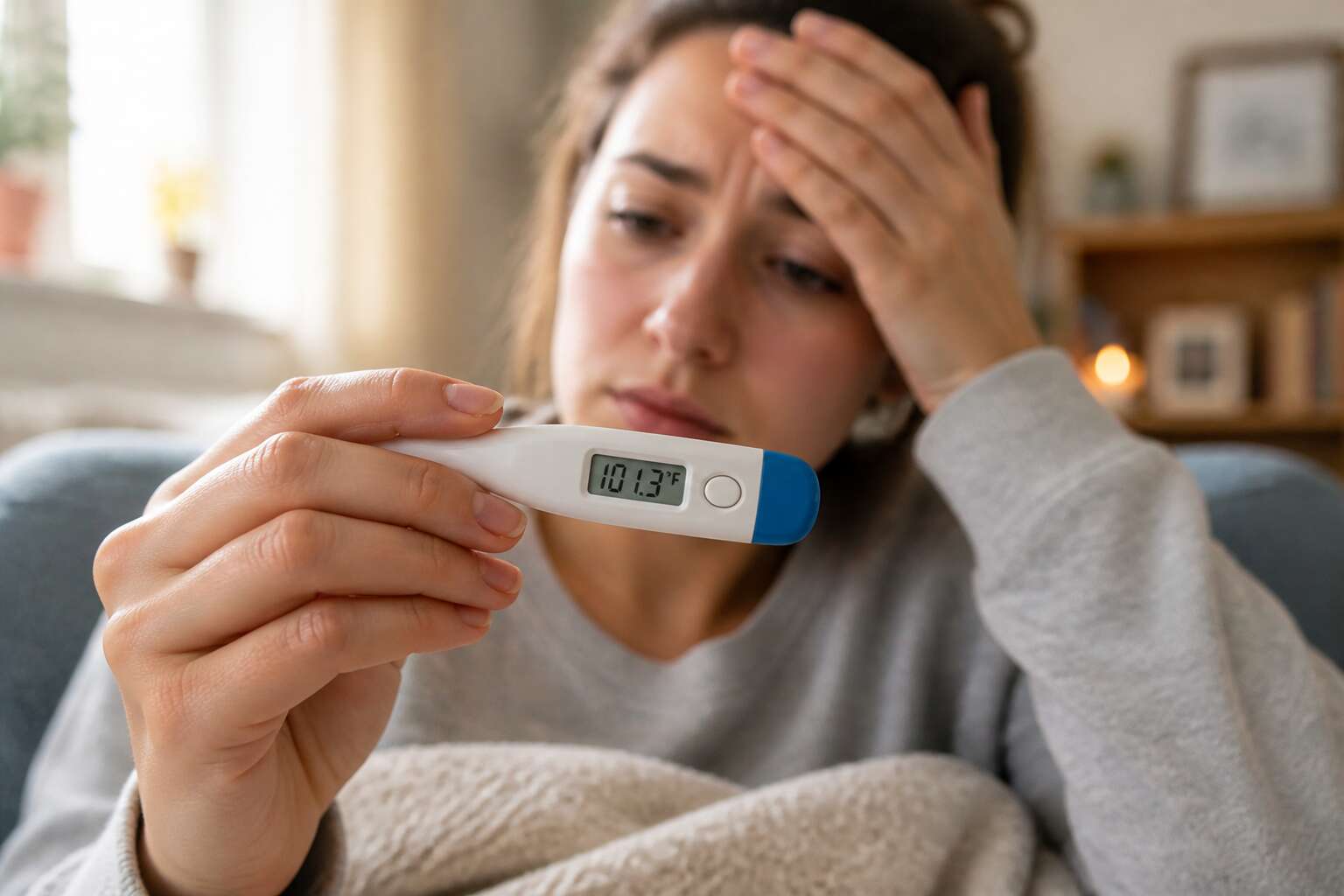
Selecting the Right Thermometer for Accurate Results
Digital vs. Traditional Glass Thermometers
Most of us remember the family mercury thermometer, passed down like a heirloom and treated with the same reverence as a sacred relic. Today, a digital thermometer uses a thermistor to measure temperature, which is faster and, crucially, without the risk of shattered glass and toxic metal. A glass thermometer requires a steady hand and a strong wrist flick to reset, a ritual that often introduced more error than the measurement itself.
When you are figuring out which device suits your medical cabinet, consider the situation:
– Rectal readings are for infants and are considered the gold standard, so a flexible tip is non-negotiable.
– An oral readout demands that you keep your mouth shut for several minutes, which is a challenge for some patients.
– Axillary measurements are convenient but notoriously unreliable, and the scale must be precise.
Digital options beep when done, offering a numeric readout that removes the guesswork of interpreting a column of silver liquid. The method you choose determines the accuracy, not the price tag. For a reliable thermometer how to check fever, the digital route is your best bet, but a glass one is not obsolete if you can read it properly.
Temporal, Tympanic, Oral, Axillary, and Rectal Options Compared
If you believe all fever readings are equal, you have clearly never held a screaming toddler still for a rectal measurement. The thermometer how to check fever properly depends entirely on where you place it, and each location tells a slightly different story about your body.
Temporal and tympanic devices offer speed, but they demand precise positioning. The ear canal hates drafts. The forehead hates hair. Oral readings are convenient, yet a hot cup of rooibos ruins everything. Axillary readings are convenient but frequently wrong.
- Rectal: the gold standard, but everyone will judge you.
- Tympanic: quick, though earwax is the enemy.
- Temporal: non-invasive, but direct sunlight ruins the plot.
Master the technique at each site and you stop guessing about your numbers.
Choosing a Thermometer Based on Patient Age and Comfort
Selecting a thermometer often feels less like a medical decision and more like a negotiation with a fidgety patient. The best device is the one you can actually use correctly on a moving target, and that reality shifts with age. A 2 year old cannot sit through a 60 second oral reading, just as a frail elder might find a forehead scan too cool and imprecise for their changing circulation. Your choice must bridge the gap between clinical need and human tolerance, otherwise you are just holding a shiny object up to a warm body.
The clinical workflow changes entirely based on the person in front of you. Your thermometer how to check fever routine must account for their patience level, not just the manufacturer’s claims. Consider the practical hierarchy:
1. Infants under 3 months: Rectal only, because accuracy here dictates emergency care decisions.
2. Toddlers: Tympanic or temporal, as they only allow quick, non-restrictive contact.
3. Older children and adults: Oral if they can hold still, or temporal as a polite compromise.
A parent who buys a temporal scanner for a newborn is setting themselves up for a false sense of security when that baby spikes a temperature at night. Conversely, forcing an oral thermometer into a teething child’s mouth invites rejection and inaccurate data. The device must suit the person, not the doctor’s protocol, and that growing distinction is why multi-user households often keep two or three different models in a drawer.
Preparing for a Reliable Temperature Reading
Cleaning and Sanitizing the Thermometer Before Use
Your thermometer is a Trojan horse for germs if you skip the prep. Many household thermometers harbor staphylococcus after use. Before you even think about a thermometer how to check fever, you must address the hygiene factor. I always inspect the probe for gunk first.
The cleaning ritual is simple, but sequence matters. For most digital models, a cotton ball soaked in isopropyl alcohol does the trick! Wipe from the tip down to the handle, using a fresh swab for the sensor. Air dry for a minute. Residual alcohol can skew the sensors.
For glass models, use lukewarm soapy water. Avoid boiling, which can shatter the column.
- Rinse the tip under running water.
- Use a soft cloth with soap.
- Dry completely before storage.
This preemptive strike ensures the number you see reflects your body’s heat, not the thermal residue of a previous patient. A clean probe is the unsung hero.
Positioning the Patient and Setting the Environment
The room must be still. A fever reveals itself only when the body is at rest, so the patient should sit quietly for at least ten minutes before you begin. A recent walk, a hot cup of tea, or even an argument can elevate the reading by a degree or more.
Position the patient upright for oral measurement, with the head tilted slightly forward. For axillary readings, the arm must be pressed firmly against the chest. The environment matters too. Avoid direct sunlight, open windows, or heaters, which confuse the sensors.
- Seat the patient away from drafts.
- Ensure the room is at a stable temperature.
- Wait ten minutes after any exertion.
This stillness is the foundation of the thermometer how to check fever process.
Common Mistakes That Skew Temperature Results
A thermometer how to check fever only yields a dependable result when the instrument itself is ready. Inspect the probe tip for cracks or residue. Check the battery! A weak charge produces drifting readings. A cold probe skews the number, so let the device reach room temperature.
Human error accounts for most unreliable results. Patients who have just sipped a warm drink will show an artificially elevated oral temperature. Moving the probe mid-reading loses tissue contact. Pressing too hard compresses the tissue and changes the heat signature. I have seen readings swing half a degree from a wrong angle.
- Reading through a blanket.
- Taking a measurement after a cold drink.
- Swapping between oral and axillary sites without recalibrating.
Each mistake shifts the result by a fraction of a degree, enough to misclassify a normal temperature as a fever. The thermometer how to check fever procedure demands one tissue site, steady pressure, and a stable instrument.
Using Probe Covers and Personal Protective Gear
The probe cover is more than a hygiene barrier. It is a thermal intermediary, and its fit dictates accuracy. A wrinkled cover creates air pockets, which insulate the sensor from the patient’s true heat. I have watched readings drift by two tenths of a degree simply because the cover was not seated properly. Gloves also change the equation. Latex and nitrile conduct heat differently, and a gloved hand resting on the probe barrel can warm it before the reading stabilises.
Here is what I verify before every measurement:
- The cover is intact, with no tears or perforations.
- The cover adheres to the probe tip without creases.
- The gloved hand holds the stem, not the barrel.
The thermometer how to check fever protocol depends on these small preparations. When you rely on a thermometer how to check fever, the probe cover is the first point of contact between machine and human. In South African clinics, where heat and humidity test both patient and device, a sealed cover and a steady hand give the sensor a clean interface. That is the whole ritual.
Step-by-Step Methods to Check a Fever by Thermometer Type
How to Take an Oral Temperature Like a Professional
The average healthy body temperature sits at 37°C, but that number shifts by the hour. Oral readings remain the standard for adults and older children. For anyone learning a thermometer how to check fever, the mouth is the most accessible site, yet it demands precise technique.
Place the tip of the device deep under the tongue, toward the back, and into the sublingual pocket. This area sits closest to the major blood vessels that mirror your core temperature. Close your lips gently and hold the thermometer in place. Do not bite down. Do not speak. Breathing through the nose is essential, as mouth exhalation cools the sensor and skews the results.
Most digital models signal completion within 30 seconds. The beep indicates the sensor has achieved thermal equilibrium with your tissue. Remove the unit and read the display. A result of 38°C or higher indicates a fever. If you drank anything hot or cold in the last 15 minutes, wait a full 20 minutes before testing. The residue of a warm beverage can raise the reading by a degree or more. For parents asking about a thermometer how to check fever in toddlers, the oral route only suits children old enough to hold the device still without instruction.
Rectal Measurement for Infants and Toddlers
For the littlest patients, the oral route is out of the question. A thermometer how to check fever in infants relies on the most accurate site available: the rectum. This method measures the core temperature directly through the mucosa, leaving no room for the environmental interference that plagues axillary or tympanic readings.
Position the infant on their back with the knees bent, or place them face down across a lap. Use one hand to gently hold the child steady. The thermometer tip requires a small amount of lubricant, such as petroleum jelly. Insert the probe roughly 1.5 centimeters for an infant, just past the sphincter muscle. The probe should be held in place, never released, for about one minute until the device signals completion. A reading of 38°C marks a fever in this age group.
Preparation simplifies this delicate task. Gather your tools before you begin to minimise restraint time.
- Check the probe for cracks or damage before use.
- Secure a fresh probe cover to prevent contamination.
- Lubricate the tip generously to ease insertion.
- Mentally prepare for a fussy baby; movement invalidates results.
The rectum presents a higher risk of tissue damage than any other site. A perforation can occur if the parent applies too much force. Holding the thermometer between two fingers, rather than the whole hand, limits the depth of insertion. This controlled resistance protects the bowel wall while still registering the body’s core heat. The result often reads a half degree higher than oral methods, so the same 38°C threshold applies.
Some parents turn to this method when a child refuses to cooperate with other options. For an accurate thermometer how to check fever in toddlers, the rectal approach remains the benchmark throughout the first three years of life. Digital devices with a flexible tip offer the safest design for this purpose, as they bend with the child’s movement instead of resisting it.
Axillary Readings for Quick Screening
The armpit does not get enough credit. Axillary readings are quick and non-invasive, but they trail core temperature by about half a degree. To use a thermometer how to check fever reliably in this spot, placement matters.
- Lift the child’s arm and press the probe into the armpit.
- Bring the arm down and hold it across the chest.
- Keep still until the device beeps.
A value above 37.5°C suggests a fever, yet it needs confirmation with a more accurate method. Rural parents favour this screening for its speed and gentle touch.
Ear Thermometer Techniques for Accurate Tympanic Results
Your eardrum shares a blood supply with the hypothalamus, the brain’s thermostat. That is why tympanic readings respond faster than skin temperatures. To use a thermometer how to check fever accurately in the ear, the probe must target the eardrum, not the curved ear canal.
Gently pull the outer ear backward and upward for an adult, or straight back for a child under three. This alignment opens the canal. Insert the probe tip, then press the scan button.
- Seat the probe snugly without pressing hard.
- Hold still until the device beeps.
An ear reading above 38°C signals fever. Excess wax or a tilted probe can lead to false lows. Recheck with the same ear each time for consistency.
Temporal Artery Scanning Along the Forehead
Temporal artery scanning sidesteps the discomfort of invasive probes. This technique reads the heat radiating from a vessel just beneath the skin. When I need a thermometer how to check fever quickly, this method delivers results in seconds.
Place the scanner flat against the forehead, then press the scan button. Glide it in a straight line toward the hairline. Keep the device in full contact with the skin throughout the sweep. A temperature above 37.5°C suggests a fever!
- Wipe away sweat first, as moisture lowers the reading.
- Stand behind the person to avoid angle errors.
- Take two readings and trust the higher one.
Troubleshooting Discrepancies Between Measurement Methods
Every thermometer how to check fever follows a strict choreography. The oral probe needs a sealed mouth for three silent minutes. The axillary probe requires a dry armpit and a firmly pressed elbow. The tympanic probe demands a straight ear canal, so pull the pinna back and insert without resistance.
Discrepancies between methods arise because each measures a different body region. A rectal reading runs highest, axillary lowest, oral sits between. Ear values fluctuate with ambient temperature and earwax. When two devices disagree by more than 1°C, the problem is placement, not the patient’s condition.
- Repeat the measurement on the opposite side.
- Allow fifteen minutes after meals or exertion.
- Verify the probe tip is clean and seated.
Use the temporal artery reading as a tiebreaker, since it tracks core temperature best. For a proper thermometer how to check fever, the temporal artery method wins every argument.
Interpreting the Numbers on Your Thermometer
Normal Temperature Ranges by Age and Measurement Site
Guidance on thermometer how to check fever often stops at the beep, yet the number itself carries deeper meaning. The human body does not maintain a single universal temperature. It shifts with age, with the hour, and with the site you choose to measure.
In adults, an oral reading of 37.0°C indicates a healthy baseline. Rectal measurements run slightly higher, while axillary readings sit lower. Infants interpret the same numbers differently. The ranges below reflect standard expectations:
- Oral: 36.1°C to 37.2°C
- Rectal: 36.6°C to 38.0°C
- Axillary: 35.9°C to 36.7°C
- Tympanic: 36.1°C to 37.8°C
Fever is defined by the measurement site. A temporal scan of 38.0°C demands attention where an axillary reading of the same value does not. When using a thermometer how to check fever correctly, interpret numbers in context, never in isolation.
Recognizing Low-Grade vs. High-Grade Fevers
Interpreting the number on the screen requires more than a glance. A thermometer how to check fever properly shows you the value, but your response depends on the degree of elevation. Low grade fevers often signal the immune system at work. High grade fevers demand closer observation. In adults, an oral reading of 38.0°C is low grade. At 39.5°C, the fever becomes high grade. For infants, thresholds shift lower.
- Low grade: 37.5°C to 38.3°C (oral)
- Moderate: 38.4°C to 39.4°C
- High grade: 39.5°C or above
The same readings in children can look different. A 38.0°C reading in a three month old warrants immediate attention, while the same number in a healthy adult is routine. Context guides your next step!
How Time of Day Affects Baseline Body Temperature
Your body runs on a strict timetable, and your temperature obeys it. Around 4 AM you run cool, while by late afternoon you run warm. This circadian drift means a 37.0°C reading at sunrise is not equivalent to that same number at sunset. A thermometer how to check fever must respect this rhythm, otherwise you may mistake your body’s normal afternoon surge for a genuine problem.
The swing is substantial. Baseline temperature shifts by half a degree or more through the waking day. Morning readings sit low, evening readings climb, and night shift workers flip the entire curve. So before you treat any number as alarming, consider your body’s internal schedule, not just the screen in front of you. Context matters as much as calibration.
Interpreting Inconsistent or Unusually Low Readings
Interpreting the numbers on your thermometer can feel like reading a cryptic message. A thermometer how to check fever must guide you through oddities such as 35.9°C or 36.2°C, which often appear in healthy adults. Unusually low readings usually surface after waking or when the probe loses contact with tissue. Inconsistent values, however, point to technique or equipment failure.
Consider these common culprits:
- Loose probe placement
- Recent ingestion of cold fluids
- Excessive perspiration on the skin
- A weakening battery in the device
Your body’s own variability matters too. That low number might reflect your true baseline, not an error. Treat each reading as a snapshot, not a verdict.
Comparing Readings Across Different Thermometer Types
Here is a feverish fact: a 0.8°C gap between your ear and forehead thermometer is completely normal. An ear thermometer captures core temperature from the tympanic membrane. A temporal scanner reads heat along the superficial artery. A rectal reading sits higher than oral readings. So when your thermometer how to check fever yields mismatched numbers, confirm which site each device targets before raising alarms.
The practical fallout: you cannot swap devices mid-illness and expect consistency. Stick to one thermometer type for tracking a fever’s trajectory. Mixing devices creates readings that fail to correlate and fuels needless worry. Even on a hot Durban afternoon, your temporal scanner drifts while your tympanic device holds steady.
Consider the typical hierarchy:
- Rectal: gold standard, most accurate
- Oral: reliable for older children and adults
- Axillary: convenient but reads lower
- Temporal and tympanic: fast but operator dependent
Weird results usually trace back to site, not sickness.
Best Practices for Follow-Up and Medical Guidance
Tracking Temperature Trends for Your Healthcare Provider
One spike tells you little. A trend tells you everything. Your provider needs a pattern, not a single number. So build a simple log!
Each time you use a thermometer how to check fever, write down the reading. Note the time, the site, and any other symptoms. Keep the same measurement method throughout.
- Record every four to six hours while awake
- Include medication names and doses
- Mark whether the fever dropped after treatment
After two days, review the log. Look for peak times and step-down patterns. Bring this information to your appointment. Your doctor will interpret the curve and decide on next steps. This record gives your doctor clear evidence.
Home Care Measures for Comfort During a Fever
A number on a screen is not a diagnosis. It is a clue, and your response to that clue matters as much as the reading itself. Treatment only becomes clear once you understand how your body responds to the fever and to the medication you take.
Home care focuses on comfort. Hydration is the first line of defence. Water, clear soups, and oral rehydration salts replace what the heat takes out of you. Light clothing and a cool, well ventilated room prevent overheating without causing shivers. Rest is non negotiable. Your body has raised its core temperature to fight an invader. It needs energy for that battle.
– Apply a lukewarm cloth to the forehead and neck.
– Use a fan set to low, not direct, airflow.
– Remove heavy blankets and thermal layers.
When symptoms worsen or a high fever persists beyond 48 hours, contact your healthcare provider. South African guidelines suggest urgent review for infants under three months with any temperature above 38°C. For adults, a persistent fever with a stiff neck, rash, or difficulty breathing requires immediate attention.
Your temperature log is your strongest tool. It confirms that the thermometer how to check fever method you used was consistent. It shows the doctor how the fever behaves between doses. Keep the record accurate, note the site used, and never switch between oral and axillary readings without marking the change. A consistent method gives your doctor the clearest possible picture. That picture determines whether you need a physical exam, a blood test, or a course of antibiotics. The answer starts with you holding the thermometer correctly and ending with you trusting the record you have built.
Warning Signs That Warrant Immediate Medical Attention
A temperature log is a narrative for your clinician. A consistent thermometer how to check fever routine, using the same site and device, transforms scattered readings into a reliable trend. That trend allows your doctor to judge whether the fever is climbing, plateauing, or breaking.
Warning signs warrant prompt action. I have seen patients wait out red flags because the reading seemed modest. Do not make that error!
- Temperature above 39.5°C in an adult despite antipyretics.
- Stiff neck, photophobia, or a petechial rash.
- Confusion, seizures, or inability to wake.
- Breathing difficulty or chest pain.
In South Africa, medical guidance is clear: infants under three months with a temperature above 38°C need same day evaluation. For older children, persistent vomiting or dehydration alongside fever warrants a call. Your thermometer how to check fever method should be documented, including the site used, because axillary readings run lower than rectal ones. A doctor who sees this context can act faster.

0 Comments