Understanding the Science of Perfectly Cooked Meat
The Role of Internal Temperature in Food Safety
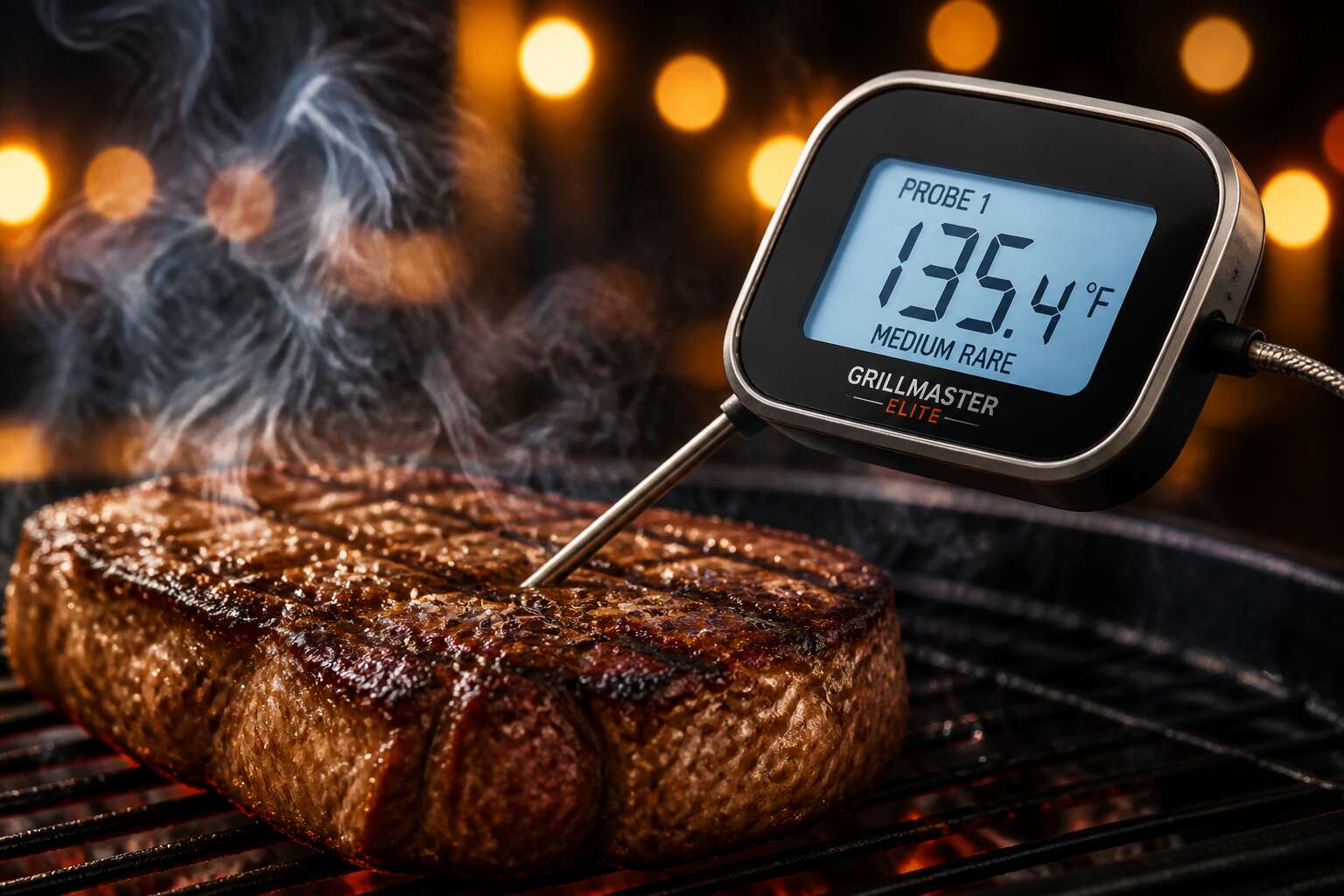
The maestro of the braai does not rely on intuition alone. A digital expert grill thermometer reveals the quiet transformation within a slab of beef, where heat performs its silent alchemy. The internal temperature is the only honest messenger, telling you the exact moment muscle fibers relax into tenderness while the risk of foodborne illness quietly fades.
Consider the science. Proteins denature at specific heat thresholds. Collagen, that stubborn connective tissue, only begins to melt into gelatin above 70°C. When you monitor the core temperature, you are tracking these molecular changes in real time. A steak removed from the heat at 52°C will continue to rise, a phenomenon known as carryover cooking, where residual heat finishes the job.
The role of internal temperature in food safety is absolute. Harmful bacteria such as Salmonella and E. coli are neutralised only when the meat’s centre reaches a lethal heat zone. Without a precise reading, you are gambling with your guests’ health. A pork sosatie that looks pale can still harbour danger within its core.
To master this science, you must understand the stages of doneness:
1. The proteins unwind and lose moisture, though some remain intact.
2. Collagen shrinks, pushing juices toward the surface.
3. The temperature plateaus as connective tissue finally dissolves, creating that desired fork-tender bite.
Each step is a precise event, not a vague guess. The digital expert grill thermometer captures these shifts with exacting accuracy, allowing you to anticipate the final result before you ever slice into the meat. It turns the barbecue into a laboratory where flavour and safety converge with every reading.
Why Ambient Heat Readings Are Not Enough
Ambient heat readings describe the fire, not the food. The air inside a kettle braai can hold 220°C while the centre of a lamb leg sits at 40°C. That gap creates overcooked edges and undercooked cores.
Heat penetrates muscle according to density, moisture, and fat distribution. This thermal gradient is imperceptible to an ambient thermometer. A digital expert grill thermometer tracks the core temperature directly, revealing how far the energy has actually travelled through the tissue.
- Surface temperatures shift quickly and mislead.
- Core temperatures change slowly and inform.
- Resting allows residual heat to equalise the gradient.
Once the probe reads the muscle, the ambient dial loses its authority.
Avoiding Overcooking and Undercooking with Precision
I have seen grown adults weep over a ruined sirloin. The fire did its job, and the meat never stood a chance! A digital expert grill thermometer reads the muscle directly, cutting through the drama of flames and smoke.
Heat travels through tissue at a pace set by density, moisture, and fat. Proteins denature at their own thresholds. Collagen takes its time. Without a probe, you are guessing with expensive meat.
- Rare means myosin has barely started.
- Medium rare means the fibres have relaxed.
- Well done means everything has tightened and wept.
That is the science, compressed into a single reading. The digital expert grill thermometer measures the actual state of the cut. Nothing else matters.
Critical Features of a High-Performance Wireless Probe
Sensor Accuracy and Response Time
Grilling is a test of patience, and a sluggish thermometer is its cruelest judge. When that moment of truth arrives, you need data instantly, not a slow crawl toward the truth.
The heart of any good digital expert grill thermometer lies in its sensor. A high-performance probe uses a thermocouple that can measure temperature changes in seconds. This allows you to catch a flare-up before it charcoals your steak or notice when the coals are dying. This is not about waiting for a number; it is about observing the interaction between the fire and your food in real time.
Accuracy is the non-negotiable second half here. A variance of five degrees might not ruin a roast, but it can pull the rug out from under a delicate fish fillet. The best units are factory-tuned to within a single degree and compensate for ambient conditions.
Consider the practical benefits:
– Instant feedback: Adjust the vents or flip the meat based on the immediate response.
– Reliability: A stable reading means you can trust the probe during a long, slow cook without worrying about drift.
For the South African braai, where the wind shifts the heat and the fire is a living thing, this speed and precision are invaluable. It makes the difference between a well-managed fire and a guessing game. The thrill is in the cooking, not the worrying, and having a responsive, accurate digital expert grill thermometer in your kit ensures the atmosphere stays relaxed while the boerewors sizzles perfectly.
Wireless Range and Bluetooth vs. Wi-Fi Connectivity
There is a quiet freedom in walking away from a fire. The wind carries the smoke, the coals settle into a steady glow, and the boerewors turns slowly on the grate. But freedom requires a reliable tether. A wireless probe offers that, yet all connectivity is not created equal. The distance between your braai stand and your lounge chair is often less than the distance between a strained signal and a lost connection. Interference from a thick brick wall or the hum of a nearby microwave can sever the link at an inopportune moment.
Bluetooth offers a short range, typically around ten meters, suited for a quick check from the kitchen counter. This method is simple and drains the battery at a leisurely pace. Wi-Fi, however, extends your reach across the entire property. You could monitor the fire from the driveway or the garden shed. The advantage lies in the continuous data feed that keeps the digital expert grill thermometer active in your pocket, even when you step out for more charcoal. The choice hinges on your movement. Do you hover close to the flames, or do you trust the fire and wander? The answer determines the technology that best serves your vigilance.
Battery Life, Charging Options, and Durability
A probe that dies mid-braai is a genuine frustration. Battery life separates a dependable tool from a fleeting gadget. Most digital expert grill thermometer units offer eight to twelve hours of continuous use, but the real question is what happens when the coals outlast the charge. Fast charging via USB-C has become a quiet necessity. A thirty minute top-up can carry you through an entire lamb shoulder cook!
Durability matters just as much. The probe cable must withstand flame licking, tongs clamping, and the occasional drop on hot ash. Look for reinforced Kevlar braiding and a waterproof rating. I have seen cheap thermometers surrender to a single thunderstorm. A quality digital expert grill thermometer withstands the elements and keeps transmitting.
- Swappable probes extend the device’s lifespan
- Magnetic backs keep the unit within arm’s reach
Dual-Probe vs. Single-Probe Configurations
It is a common misconception that any single temperature reading will save a cook. The reality of a braai is far more chaotic. A single probe only tells you about one piece of meat, leaving the rest of the grid to fate. Cooking a steak and a boerewors simultaneously with a single probe is a gamble. The sausage may be done while the steak still needs time, and you are left guessing.
A dual probe configuration is the standard for serious cooks. This allows one probe to monitor the internal temperature of your primary cut while the second probe tracks a smaller item, like a chicken thigh, or even the ambient temperature inside the kettle. Having two data points removes the guesswork entirely. It changes a solitary reading into a complete picture.
Here is what a second probe unlocks:
– The ability to monitor two different proteins at once.
– The power to track the internal temperature and the smoker temperature simultaneously.
– The flexibility to cook a large roast alongside a quick side of fish.
For any gathering where you are managing multiple deadlines, a dual-probe digital expert grill thermometer is the critical feature that ensures everything lands on the table at the same moment. You stop cooking on hope and start cooking on data.
App Integration, Real-Time Alerts, and Graph Tracking
The unseen failure in a braai is the cautious glance. App integration on a digital expert grill thermometer turns that glance into a discipline. I can sit in the doorway, watch the live thermal stream on my phone, and understand that distance does not reduce my control.
Real-time alerts are a precise, startling interruption. When I set a threshold, the alarm sounds only at the exact moment of consequence. That buzz breaks my distraction and executes a sharp, determined turn toward the actual work.
Graph tracking exposes the deeper afterimage of the meal. After the coals rest, I trace the micro stalls and the critical moments I lifted the hood. This chart becomes a narrow diary of my patience, which is why I study it without fail:
- The sudden rise when I opened the vent.
- The ambient collapse when the briquettes settled into grey ash.
- The slow recovery in the internal wave after I turned the protein.
Reading those lines means your digital expert grill thermometer defines the conduct, not the heat.
Mastering Different Cuts and Cooking Methods
Low-and-Slow Smoking for Brisket and Pork Shoulder
The stall at 70°C has ended many barbecue ambitions. Brisket and pork shoulder reward patience, but they punish guesswork. A digital expert grill thermometer measures the core temperature inside the meat. It tracks collagen breakdown in the brisket flat and intramuscular fat rendering in the pork shoulder. Each cut follows its own thermodynamic path, and the difference matters when you plan a cook.
A few variables matter during monitoring:
- The temperature differential between brisket point and flat
- Probe tenderness near the pork shoulder bone
- The carryover cooking surge after removal from the grill
Butcher paper and foil change how heat moves across the surface. With dual probes, the thermometer shows whether the surface temperature outpaces the core. That data clarifies your wrap timing and final rest.
Direct Grilling for Steaks, Burgers, and Chops
Direct grilling rewards immediacy. A ribeye and a boerewors respond differently to the same flame, and that is where the digital expert grill thermometer earns its place. The crust on a steak forms fast, but the interior heat travels slowly. A lamb chop needs a different approach than a beef patty. Medium-rare and medium sit 3°C apart, the span between a juicy cut and a dry one.
Consider the variables:
- Thickness of the cut changes how much heat reaches the centre
- Bone-in chops conduct heat differently than boneless portions
- Resting time allows the final temperature to climb
Burgers present their own challenge. Ground meat carries different risks than whole muscle cuts, and the digital expert grill thermometer verifies the interior temperature without breaking the crust. That matters at a weekend braai. Flare-ups and hot spots shift the heat, and the core temperature reading remains the reference.
Rotisserie, Air Frying, and Sous-Vide Complements
The digital expert grill thermometer handles more than direct flame. Rotisserie is a separate discipline. The meat rotates, heat strikes different surfaces, and the probe must stay planted. A counterweighted spit turns a chicken for two hours while the thermometer tracks the climb from the thigh’s thickest point. The skin crisps unevenly because air moves; the core temperature remains the fixed reference.
Air frying appears to be a shortcut, and it is not. The rapid fan circulates hot air aggressively. A pork fillet in an air fryer needs the same internal landmark as one over coals. The digital expert grill thermometer sits inside the meat while the basket rattles, delivering a readout the appliance timer cannot offer. The timer counts minutes; the thermometer counts doneness.
Sous-vide complements the grill without replacing it. You bag the meat, hold the water bath at the precise temperature, then sear hard. The same probe confirms both stages.
Calibration, Maintenance, and Troubleshooting
How to Calibrate Your Probe for Consistent Accuracy
Ninety percent of probe failures are not hardware failures at all, but calibration drift that has gone unnoticed for years. Think about the last time you trusted a thermometer without question. If you cannot recall, you are cooking blind. A digital expert grill thermometer is only as truthful as its last calibration, and most home cooks never perform this simple ritual. The process is not arcane. It requires boiling water, a glass of ice, and a few minutes of your patience.
First, prepare an ice slurry in a deep container. Fill it with crushed ice, then add cold water until the mixture is saturated. Submerge the probe about two inches deep, avoiding the bottom and sides of the vessel. Wait for the reading to stabilize. It should settle at 32°F (0°C). If it shows 34°F, your probe has drifted. Next, bring a pot of water to a rolling boil. Repeat the submersion. The reading should hold at 212°F (100°C) at sea level, though you must adjust for altitude. Most models have a calibration function accessed through the app or a small button on the device.
Use the following routine to keep your device honest:
1. Calibrate monthly if you grill weekly.
2. Check the probe cable for kinks or frayed insulation.
3. Clean the probe tip after every session.
4. Store the probe in a dry, padded case.
Beyond calibration, maintenance is a quiet discipline. The probe tip is delicate. Do not scrub it with abrasive pads. Gently wipe it with a damp cloth and mild soap. The cable requires care too. It is a twisted pair of fine wires, vulnerable to repetitive bending. Hang the controller out of the heat zone. Even a digital expert grill thermometer has limits. The electronics tolerate ambient temperatures up to 185°F, but the probe cable does not enjoy sustained exposure above 700°F.
Troubleshooting becomes straightforward when you understand the system. If readings jump erratically, suspect a loose connection at the probe port. Reseat the connector firmly. If the display shows “Err” or a blinking icon, the probe may be shorted. Test it with a known temperature source, like a cup of hot tap water. If it still fails, replace the probe. The device is not broken. The sensor just reached the end of its life cycle. With regular calibration and gentle handling, your thermometer will serve for years without complaint.
Cleaning, Sanitizing, and Storage Best Practices
After a long cook, the probe carries more than just data. Meat juices, marinades, and smoke residue settle into the crevices of the sensor. A quick wipe with a damp cloth is not enough. Use warm, soapy water and a soft brush to dislodge stubborn particles. For sanitizing, a food-safe spray or a 70% isopropyl alcohol wipe works well. Avoid submerging the entire unit; only the probe tip is waterproof.
Storage matters just as much. A digital expert grill thermometer placed in a hot drawer or tossed into a toolbox will suffer. Keep it in a lined case or hang it away from direct sunlight. Ensure the probe is completely dry before sealing it away. One habit I follow after every session:
- Rinse the probe tip under running water.
- Wipe with a microfiber cloth.
- Sanitize with a light vinegar solution.
- Store in a breathable pouch.
This routine takes two minutes and preserves accuracy.
Dealing with Signal Interference and Dropouts
Signal dropouts rarely stem from the digital expert grill thermometer itself. More often, they trace back to physical obstruction or electromagnetic noise. A thick stainless steel lid, a metal chimney, or a nearby microwave can interrupt the transmission between probe and receiver. Before assuming the unit is faulty, reposition the receiver within line of sight of the probe and move it at least a metre away from other electronics.
Calibration and maintenance play a supporting role here. A probe with a loose connection or corroded contacts will produce erratic readings that mimic interference. Regularly inspect the probe cable for kinks and the jack for debris. If dropouts persist, test the probe in a glass of iced water to confirm the temperature reads 0°C; if it does not, the probe may need replacement rather than recalibration.
For recurring interference in a busy kitchen or braai area, follow this order:
- Move the receiver closer to the grill.
- Switch to a different wireless channel if the app offers one.
- Pair the probe again after clearing the receiver’s memory.
Firmware Updates and App Syncing Issues
A thermocouple’s drift is an insidious thing. It happens so slowly, over months of use, that you might not notice the gradual shift until a brisket comes out tougher than shoe leather. The digital expert grill thermometer demands honesty from its sensors, and honesty requires periodic verification. Boiling water should read 100°C at sea level, and a slurry of ice and water should hover near zero. If your readings deviate by more than a degree or two, a simple offset adjustment in the companion app becomes your best friend.
Firmware updates arrive quietly, like a whisper of improvement. When the app refuses to sync, resist the urge to toss the device across the braai area. A stale Bluetooth cache is usually the culprit.
1. Force stop the app completely, not just background it.
2. Toggle your phone’s Bluetooth off and on.
3. Reopen the app and allow it to rediscover the device.
4. If the connection remains stubborn, delete the thermometer from the app’s device list and pair it anew.
For those who measure their success in perfectly rendered lamb chops or slow-smoked pork belly, the ritual of maintenance extends beyond the physical unit. The digital expert grill thermometer’s firmware governs response times, alarm thresholds, and graph smoothing algorithms. An outdated version may fail to log data accurately, which makes historical comparisons useless. Checking for updates weekly keeps the device’s intelligence sharp. And remember, the receiver’s memory holds past sessions like a diary. Clearing it occasionally prevents data cross-contamination that confuses the syncing process. A well-maintained digital expert grill thermometer is a companion, not a gadget, and treating it with reverence ensures it never lets you down when the coals are glowing and the smoke is curling upward.
Replacing Batteries, Probes, and Accessories
A probe that fails mid-session turns a carefully planned cook into guesswork. The digital expert grill thermometer relies on batteries and probes that wear out with regular use. Weak batteries produce erratic readings that mimic sensor drift, so replace the AAA cells every few months. The low-battery indicator appears well before the unit gives up entirely.
Probes suffer their own slow decline. Wire insulation cracks near the connection point after repeated bending. When readings jump by ten degrees and settle nowhere, the probe is likely the culprit. Swapping in a replacement takes minutes:
- Pull the old probe out of the receiver port.
- Insert the new probe and press firmly until the connector clicks.
- Confirm the new reading in the app.
Accessories like charging cables deserve attention too. A frayed cable charges intermittently, leaving the receiver dead at the worst moment. Keep spares on hand and test them monthly. Preventive care extends the life of the digital expert grill thermometer more than any other habit.
Common Error Codes and Simple Fixes
An error code on the display means the digital expert grill thermometer is trying to communicate, not being obstinate. Most codes point to a loose connection, a shorted probe, or a receiver in need of a hard reset. E2 usually signals a probe reading outside its calibrated range. Inspect the tip for damage and reseat the connector firmly. E5 indicates an internal communication failure. Remove the batteries, wait thirty seconds, and reinsert them. This clears most glitches without further fuss.
Preventive maintenance keeps these codes rare. Keep the probe cables clear of hot surfaces and check the receiver housing for moisture after each cook. A monthly verification against a known reference temperature catches drift early. The digital expert grill thermometer rewards this attention with dependable readings.
Common fixes:
1. E2: reseat or replace the probe
2. E4: clean battery contacts
3. E5: hard reset the receiver
Advanced Techniques for Data-Driven Grilling
Creating Custom Temperature Curves and Profiles
Most grillers treat temperature as a single number. The digital expert grill thermometer shows how that number evolves over time. Custom curves let you program gradual climbs or deliberate pauses to break down collagen at precise moments.
Consider building profiles for repeat cooks. A brisket curve might hold 52°C for ninety minutes before climbing, while a lamb shoulder benefits from a different trajectory altogether.
Your approach could include:
- Logging ambient and internal readings from previous cooks to refine curves
- Adjusting ramp rates based on meat thickness and starting temperature
- Using historical graphs to identify stall points and compensate early
Each saved profile becomes a benchmark. The digital expert grill thermometer turns intuition into measured action, giving you a repeatable framework for your best cooks.
Logging and Comparing Cook Sessions for Replication
Two briskets from the same butcher, same rub, same smoker. One disappears in three hours, the other takes six. The difference hides in the data. The digital expert grill thermometer records what memory forgets: ambient drift, probe lag, the exact moment the stall begins.
Logging each session creates a comparison library. Stack the graphs from your best cook against a mediocre one and the divergence becomes obvious. I have caught myself assuming a cook went perfectly, only to find the graph showed a 15 degree temperature swing I completely missed.
- Compare ambient temperature curves against final texture results
- Track how different wood types affect temperature stability
- Note the time between flipping and internal temperature recovery
Replication demands more than instinct. The digital expert grill thermometer turns every cook into a reference point you can consult before the next one.
Using Ambient Probe Readings to Manage Pit Temps
The ambient probe on a digital expert grill thermometer does more than report air temperature. It gives you a live picture of your smoker’s behaviour. Place it near the meat, but not above the fire, to capture what the food actually experiences. When the pit temp drifts, you can respond before the meat absorbs the swing.
I use ambient readings to find hot spots inside the kettle. Moving the probe across the grate reveals where heat concentrates. Track these patterns:
- Temperature recovery time after adding a log
- Difference between grate level and lid thermometer readings
- Wind direction effects on pit stability
These patterns become a signature of that specific smoker. Learn it, and you can manage the pit more confidently.
Multi-Meat Coordination and Timing for Large Gatherings
Hosting a large braai means multiple cuts of meat finishing at different times. A single digital expert grill thermometer, equipped with multiple probes, transforms this juggling act into a sequence of precise events. You can track a whole sirloin on the cooler side while monitoring boerewors closer to the coals. The goal is to have everything rest and be ready for carving simultaneously.
The data from previous logs helps you stage the cook. If the ribs typically need six hours and the chicken only ninety minutes, you can schedule the fire and the meat accordingly. The key is to work backwards from the serving time.
– Start the large, slow cuts early in the morning.
– Add medium-format meats like pork belly or lamb sosaties halfway through.
– Introduce quick-cooking items like chicken thighs or fish only when the internal temperature of the larger roasts is nearing its target.
This staggered approach prevents the stress of a primed grill and no space to use it. The thermometer’s historical data is your timeline guide. You are not guessing; you are referencing the rhythm of previous, successful cooks. This method ensures the carriage return for every guest is a hot plate, not a cold one.

0 Comments