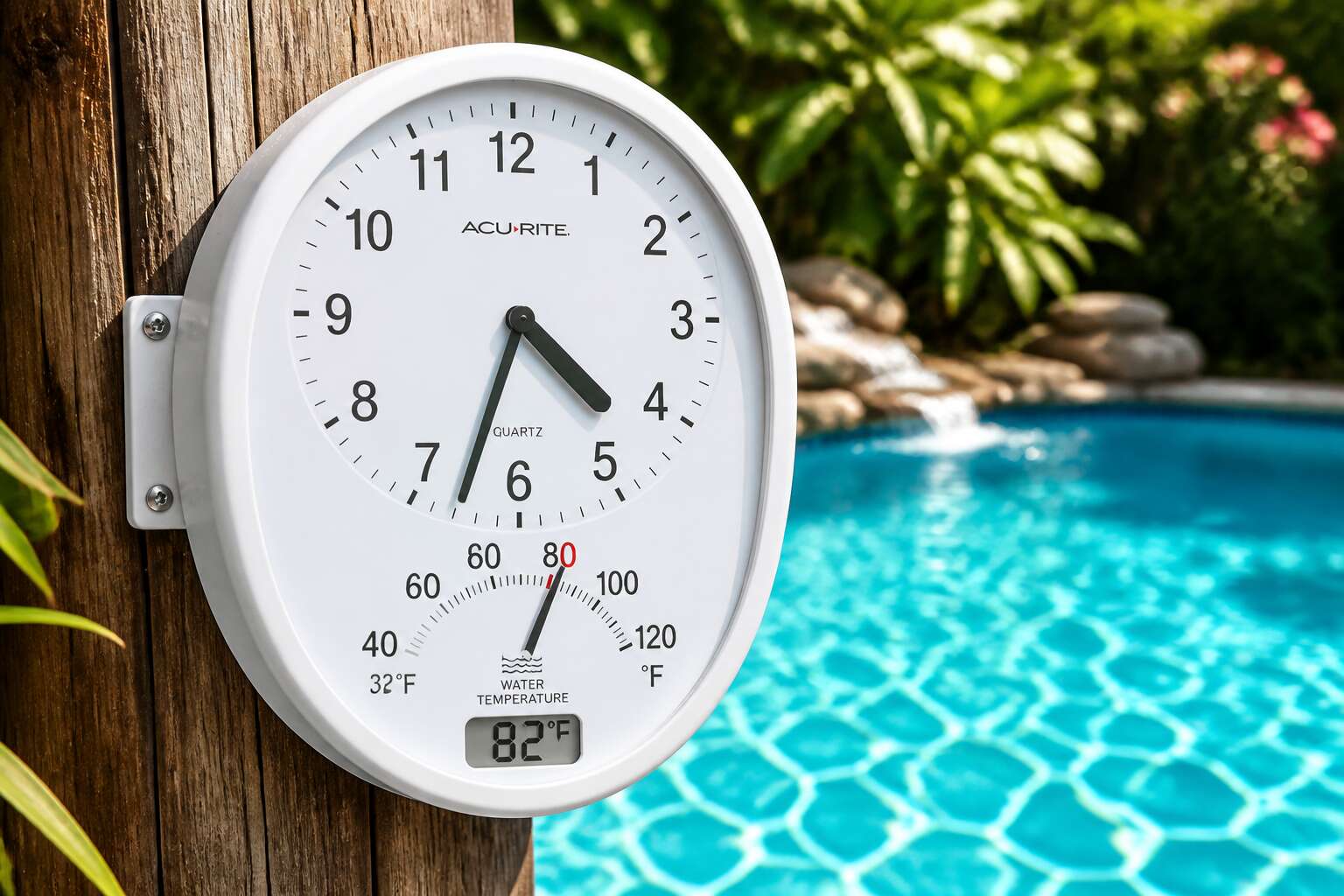
Why Poolside Time and Temperature Displays Matter
Safety and Comfort for Swimmers
A swimmer’s perception of time changes once they are in the water. Without a visible reference, a thirty-minute workout can feel like an hour, leading to premature fatigue or cutting sessions short. This is where a quality outdoor pool clock thermometer becomes an essential piece of equipment rather than a simple amenity. The dual function of tracking both time and water temperature provides the data needed to make smart decisions about your swim.
When the sun is high and the air shimmers with heat, swimmers often stay in the water too long. An accurate display serves as a constant reminder. The temperature reading is equally critical for health management. Cold water can numb the muscles and increase the risk of cramps, while excessively warm water can lead to overheating and dehydration. Having this information readily available helps you pace yourself.
Installing a dedicated display offers tangible benefits for any pool owner:
1. Safety Management: It helps prevent overexposure during extreme weather, reducing the risk of heat exhaustion or cold-water shock.
2. Workout Efficiency: Swimmers can track their intervals and rest periods accurately, improving training results.
3. Comfort Control: Knowing the current water temperature allows you to adjust your swimming duration or suit choice before you get in.
4. Consistent Monitoring: A quick glance from across the yard provides instant data without getting your phone wet.
Visibility is the primary factor that separates a useful tool from a decorative piece. A clock that is difficult to read is often ignored. High-contrast numbers and a clear lens ensure you can see the metrics from the pool deck, even during the brightest part of the day. The right equipment simplifies your routine, allowing you to focus on your strokes instead of guessing at the time or worrying about the chill. It turns a simple swim into a calculated, comfortable activity.
Enhancing Pool Ambiance and Aesthetics
Stand beside a well kept pool in Johannesburg or Durban. Notice the details. The coping. The lighting. The planting. Then look at the wall. I have designed several of these spaces, and the wall is always the last thing anyone considers. A bare patio wall lacks purpose. An outdoor pool clock thermometer completes the space with a decisive focal point. The eye moves from the water to the structure beyond, creating depth and intention.
Material choice determines character. A brushed stainless frame catches the late afternoon light. A matte black casing disappears into the shadow of a braai area. The numbers become architectural elements.
Consider what a well placed outdoor pool clock thermometer adds to the scene:
- A visible mass that balances the long horizontal line of the water.
- A readout that gives the wall a reason to exist.
- A feature that guests notice even if they cannot name it.
Practical Benefits for Pool Maintenance
The outdoor pool clock thermometer is the quietest member of your maintenance team, and it never takes a day off. Water chemistry shifts with heat, and a few degrees can alter chlorine demand or accelerate algae growth. Seeing the temperature alongside the time helps you spot patterns, like why the pump runs longer on certain afternoons or when evaporation spikes.
Pool owners in Johannesburg deal with dramatic daily swings. A wall mounted readout removes guesswork from chemical dosing. You notice the water is warmer than usual, so you adjust the sanitiser before problems start. The display also shows when the heater cycles unnecessarily, saving electricity during mild summers.
- Track daily temperature trends to plan chemical additions.
- Compare time and heat to identify inefficient pump schedules.
- Monitor overnight cooling that signals a cover malfunction.
Maintenance becomes a matter of observation rather than reaction. The outdoor pool clock thermometer gives you data you would otherwise ignore, turning a pleasant poolside glance into a practical habit.
Key Features to Look For in a Poolside Weather Station
Durability and Weather Resistance
A poolside without a reliable outdoor pool clock thermometer is essentially a sundial that only works when you remember to look at it. We have all squinted through chlorinated water at a blurry wall display, wondering if it is 2 p.m. or 6 p.m., only to realise your skin has already turned a shade of crimson that matches the patio tiles. The sun is a harsh critic, and your equipment needs to survive its relentless glare, the sudden afternoon thunderstorms, and the splash zone of a dozen cannonballs.
Durability is the first line of defence against the elements. A cheap plastic housing will turn brittle and yellow within a single South African summer. You need a unit built with a robust, UV-stabilised ABS shell or rust-proof aluminium casing. The lens must be shatterproof acrylic, not glass, because a stray volleyball is a ticking time bomb. If the casing flexes or creaks when you mount it, it is already surrendering to the heat.
Weather resistance goes beyond just looking waterproof. Here is what separates the champions from the casualties:
– IP65 rating or higher: This ensures complete protection against dust and low-pressure water jets, so a sudden downpour or a rogue splash from the diving board won’t kill the internals.
– Sealed battery compartments: Look for a screw-down cap with a rubber gasket. This prevents moisture from corroding the terminals and leaving you with a blank face.
– A wide operating temperature range: The unit should function accurately from a frosty Highveld morning at 5°C to a blistering Kruger afternoon pushing 45°C, without the LCD freezing or the numbers becoming a mushy blur.
Clarity is the final, often overlooked aspect of survival. A weatherproof shell means nothing if the display fades in direct sunlight. Look for a high-contrast black-on-white LCD or a thermochromic display that shifts in bright light. The numbers should be at least three inches tall to be readable from the pool deck, and the thermometer should update quickly to reflect the actual water temperature, not just the heat radiating off the black plastic mounting screws.
A truly resilient outdoor pool clock thermometer is not an accessory; it is a piece of infrastructure. It works quietly, ignoring the weather tantrums, so you know exactly when to call it a day before the braai fire becomes the only source of warmth. Invest in the build quality, and you will never have to guess again.
Power Options and Energy Efficiency
Most outdoor pool clock thermometer units fail because of poor power management, not weather. You want a device that runs for months, not days, on a single set of batteries.
Here is what separates efficient models:
- Solar assisted charging: A small photovoltaic panel keeps the battery topped up during Highveld summers.
- Low power LCD: A display that draws microamps, not milliamps.
- Auto dimming: The backlight adjusts to ambient light, saving energy at night.
I prefer a unit with a lithium battery backup. It holds charge better in extreme heat. The display should also have a battery indicator, so you never get caught with a blank face during a braai. Power efficiency is not a luxury. It is the difference between a reliable timer and a decorative ornament.
Additional Sensors and Connectivity
Most pool owners settle for a simple water temperature readout, but the real utility comes from layering data. A robust outdoor pool clock thermometer should accept inputs from multiple sensors: air temperature, humidity, wind speed, and a UV index. These numbers matter in the Highveld, where afternoon storms shift conditions quickly.
Connectivity turns those numbers into actionable insight. Bluetooth or Wi-Fi links allow you to monitor the pool from inside the house, and some models push warnings when readings swing sharply. The display becomes a single dashboard.
- An anemometer interprets wind patterns for pool heating decisions
- A hygrometer tracks moisture levels for scheduling evening swims
- A UV sensor measures exposure intensity across the day
With those feeds feeding into your outdoor pool clock thermometer, you stop guessing and start understanding the microclimate of your garden. Remote access via an app means you can adjust expectations before stepping outside.
Installation and Placement Tips for Maximum Visibility
Ideal Mounting Locations Around the Pool
An outdoor pool clock thermometer proves useful only when the eye can catch it from the water. Mounting it on the west wall, facing the afternoon sun, keeps the digits readable during peak swim hours. In South African summers, that often means the side where the braai stands, not the shaded patio.
Pick a spot where bathers naturally lift their gaze. Consider these mounting locations:
- The pump house side, visible from the deep end
- A fence post near the steps
- The retaining wall, angled toward the lounger line
Avoid tree branches that cast moving shadows. The ideal height is eye level when seated on a pool ledge. This orientation provides a direct sightline without neck craning. As the sun arcs, a south facing placement prevents glare during morning laps. For pools with a solar cover, position the outdoor pool clock thermometer on a removable post to keep readings accessible.
Avoiding Glare and Reflection Issues
The South African sun is unrelenting. It turns pool water into a mirror that can wash out any display. A quality outdoor pool clock thermometer must be angled away from the water’s reflective surface, yet remain within the bather’s natural field of view. Mounting it perpendicular to the prevailing afternoon light reduces the harsh wash that leaves digits unreadable.
Testing at different times of day is the only reliable method. Walk the pool perimeter and simulate swimming positions. The lens of the outdoor pool clock thermometer should be tilted downward slightly, not flat. This simple adjustment blocks the glare from the sky’s lower arc. For covered areas, consider matte finishes to diffuse reflected light.
- Check readings from the shallow end at 10 AM
- Check from the deep end at 3 PM
- Observe how the pool’s own ripple pattern affects visibility
Each pool has its own topography of light. Adjust once, then trust the placement.
Hardwiring vs. Solar Powered Options
Choosing between hardwired power and solar energy for your outdoor pool clock thermometer is a decision that hinges on more than just convenience. It is a matter of understanding your specific environment and the level of reliability you demand from your equipment. A hardwired unit offers an unwavering connection, immune to the whims of cloud cover or the angle of the sun. Once installed by a qualified electrician, it provides a constant power source that ensures the display never fades, even during a week of overcast skies or in the depths of winter.
However, the installation for a hardwired model is more invasive. You are dealing with trenching, conduit, and a dedicated circuit, which can be a significant undertaking if your pool area is already landscaped. This is where solar-powered models present a compelling argument. They offer a level of placement freedom that hardwired options simply cannot match. Without the need for cabling, you can position the unit in the optimal spot for visibility without worrying about the distance to a power source. The reduction in upfront labour costs is another tangible benefit, as you avoid the expense of hiring an electrician.
Yet, the true test for a solar-powered outdoor pool clock thermometer lies in its daily performance. The photovoltaic panel must be positioned to capture direct sunlight for several hours, which might conflict with the shaded placement we discussed earlier for glare reduction. You might find yourself having to choose between a spot that is good for reading the clock and a spot that is good for charging the battery. As a rule of thumb, consider this for your solar model:
– Panel orientation: Face the solar panel true north (in the Southern Hemisphere) to maximise exposure.
– Battery capacity: Look for a unit with a high-capacity lithium battery to bridge consecutive cloudy days.
– Reading angle: Ensure the display is still readable while the panel is angled toward the sun.
– Local climate: In regions with heavy summer thunderstorms, a backup power option is wise.
For the minimalist who prefers a clean aesthetic and absolute consistency, the hardwired route eliminates the daily thought of whether the battery has topped up. It sits there, glowing with the same intensity at noon as it does at midnight. But for the project-minded pool owner, the solar installation offers a satisfying autonomy. It operates independently, a silent, glowing sentinel that asks for nothing but light to keep performing its duty. Perhaps the real question is not which is more efficient, but which type of reliability you value more: the constant hum of the grid, or the silent charge of the sun. In the end, the right choice is the one that keeps your eye on the time, not on the power indicator.
Weatherproofing and Maintenance Considerations
“`html
Step into the pool before you drill a single hole. The difference between a readable outdoor pool clock thermometer and an expensive wall ornament is decided from the water. If you can read the numerals while treading water without squinting, the spot works. Mount the unit at eye level from the pool, ideally on the garden side where reflections are minimal. In South Africa, orient the face slightly east of true north to avoid the harshest afternoon glare, and keep it clear of overhanging branches.
For weatherproofing, use a stainless steel bracket with rubber gaskets, and seal every screw hole with marine-grade silicone. Inspect the seal around the lens twice a year. Coastal salt air corrodes exposed terminals, so apply dielectric grease to all connections. For regular upkeep:
- Clean the sensor vents every two months
- Check the mounting bracket torque at season start
- Replace batteries before winter
“`
Top Design Styles to Complement Your Outdoor Space
Modern and Minimalist Displays
The Poolside Timepiece: A Fusion of Function and Form
Your backyard pool is more than just a body of water. It is the stage for countless summer memories, a sanctuary for relaxation, and an extension of your home’s personality. In this curated outdoor living space, every detail matters, from the texture of the paving stones to the shade of the lounge cushions. However, one element often gets overlooked until the sun becomes too intense or the evening air turns crisp: the clock and thermometer.
A dedicated outdoor pool clock does more than just tell you when the barbecue is ready. It helps you manage swimming sessions, track sun exposure, and gauge the perfect water temperature for an evening dip. Yet, choosing the right unit is not merely a practical decision. It is a design decision. The right timepiece can anchor your patio aesthetic, serving as a functional piece of art that ties the entire space together.
Modern and Minimalist: The Art of Clean Lines
If your pool area is defined by sleek architectural lines and a monochrome palette, a minimalist clock is your ideal companion. These designs often feature a flat, powder-coated aluminum frame in matte black, white, or brushed steel. The face is typically clear and uncluttered, with simple bar indices instead of traditional numbers. This style thrives on subtlety. It does not shout for attention; instead, it integrates seamlessly into the wall, allowing the water and the landscaping to remain the primary visual focus.
For these modern setups, look for a thermometer that matches the clock’s clean aesthetic. Many contemporary models combine both functions in a single, streamlined unit, using a hidden sensor to deliver readings without disrupting the visual flow. The result is a crisp, architectural statement that suggests precision and calm.
Coastal and Rustic: Embracing Organic Texture
Conversely, a pool nestled among natural greenery or designed to mimic a lagoon calls for a different approach. Coastal and rustic designs favor materials like teak wood, rope, or weather-resistant wicker. A clock with a driftwood-style frame or a weathered bronze finish adds a layer of warmth and authenticity. These pieces feel as though they have always been part of the landscape, echoing the organic shapes of the rocks and plants around the water.
When selecting a thermometer for this aesthetic, consider one with a large, easy-to-read dial encased in a rustic frame. The goal is to create a sense of effortless summer living. The timepiece should look as good mounted next to an outdoor shower as it does on a fence beside a row of potted ferns, blending utility with the relaxed vibe of a coastal retreat.
Industrial and Transitional: A Touch of Bold Character
For those who prefer a bit of edge, the industrial style offers a striking middle ground. These clocks often utilize heavy-gauge steel, visible rivets, and a distinct “vintage factory” look. The dials are usually oversized, designed to be read from across the yard. Pairing this bold timepiece with a thermometer that mimics an antique pressure gauge can create a unique focal point. It adds a layer of story and character, suggesting durability and a nod to classic craftsmanship.
If a full industrial look feels too heavy, a transitional style offers a softer alternative. This involves blending clean lines with warmer tones, such as a bronze or copper finish that will develop a lovely patina over time. This approach allows you to introduce a subtle vintage charm without sacrificing the clean, modern functionality you need from your outdoor gear.
Choosing Materials for the Long Haul
While the style sets the tone, the construction determines the lifespan. Outdoor elements are unforgiving. The South African sun is intense, and coastal humidity can corrode inferior metals. Always prioritize units with a high IP rating for water resistance. Look for materials like 316 marine-grade stainless steel, or heavily sealed aluminum. The clock face should be made of shatterproof acrylic or polycarbonate, ensuring it remains clear and readable for years, regardless of the weather’s mood swings.
Ultimately, the perfect pool clock thermometer is the one that feels like it was custom-made for your space. It bridges the gap between telling time and telling a story. It is a subtle nod to your personal taste that enhances every single swim, turning a simple poolside glance into a moment of appreciation for your carefully crafted outdoor haven.
Classic and Rustic Themes
Classic and Rustic Themes
A weathered teak frame holds the face of an outdoor pool clock thermometer like a prized heirloom. These designs evoke long summers, coastal fog, and the slow patina of age.
- Reclaimed timber bodies with visible grain
- Bronze or copper bezels that deepen over years of sun
- Roman numerals etched into cream enamel
Classic themes lean into honest craftsmanship. The hands move unhurried, matching the rhythm of a dappled Karoo afternoon or a Cape garden in bloom. A wooden or wrought iron mount lets the unit blend with stone walls and fynbos-lined edges. The timepiece becomes part of the terrain, not an imposition upon it.
Multi-Functional Units with Clocks and Thermometers
The silence around a pool is rarely empty. It hums with the quiet expectations of the day, yet it offers no anchor for the hours. An outdoor pool clock thermometer does more than measure; it frames the experience, turning floating minutes into a deliberate retreat. After addressing safety, maintenance, and the practicalities of mounting, we turn to the visual identity of the unit itself. The design should not merely occupy wall space; it should articulate a philosophy of leisure that resonates with the architecture of your home.
For a setting where the horizon meets the water, consider Coastal Minimalism. This approach favors brushed stainless steel and frosted glass, elements that catch the salt-tinged air without corroding. The dial is often stark white, with fine, maritime-inspired numerals. It is a study in subtraction, where the clear readability of the outdoor pool clock thermometer becomes an act of quietude. The piece does not shout; it whispers of tide charts and long, unhurried afternoons.
Conversely, the Industrial heritage style offers a counterpoint of heft and history. Imagine a housing of powder-coated matte black, with exposed brass fittings that develop a patina over years of sun and rain. This design embraces the raw, functional roots of the instrument. It speaks to a rugged durability, a nod to the machinery that filters and circulates the water itself. Placed against a backdrop of limestone or exposed brick, this variation of the outdoor pool clock thermometer feels both monumental and essential.
Then there is the Organic Earth aesthetic, which diverges from synthetic materials entirely. These units often feature a frame of locally sourced hardwoods, treated with marine-grade oils to withstand the elements. The face might be a soft, sand-hued composite, with hand-painted markers that mimic the natural irregularities of river stones. This style is less about precision and more about connection, grounding the pool area in the tactile warmth of the natural landscape. It invites a slower tempo, a reminder that time, like water, flows best when we observe it without resistance.
Selecting among these forms ultimately dictates the emotional temperature of your space. The device will be read dozens of times daily, often unconsciously. Allowing its design to align with the existing textures and colors of your outdoor environment creates a seamless visual logic. Whether you choose the clean line, the industrial relic, or the naturalist’s token, the goal remains constant: to make the measurement of time feel like an integral, beautiful part of the ritual, rather than an interruption of it.
Frequently Asked Questions About Poolside Clocks and Thermometers
How Accurate Are Outdoor Thermometers?
How accurate are outdoor thermometers? The answer lies in the placement of the sensing element and the ventilation around it. A thermometer baked in direct sun will report a temperature several degrees above what the water truly offers. That is why a thoughtfully constructed outdoor pool clock thermometer shields its sensor inside a ventilated housing, away from the heat of the pool deck.
In our experience, a well designed unit stays within one or two degrees Celsius of the actual water temperature. But the surrounding environment intervenes. Consider what disturbs the reading:
- solar radiation heating the enclosure,
- reflected warmth from concrete and stone,
- and the subtle heat emitted by the clock display itself.
Each factor shifts the reading. A well built unit separates its electronics from the sensing element, preserving accuracy in the numbers you consult each morning.
Can These Devices Withstand Extreme Heat and Rain?
In South Africa, the sun can push a pool deck to 47 degrees while the water sits at 24. A properly engineered outdoor pool clock thermometer separates the sensor from the display and shields it inside a ventilated housing. For rain, the enemy is not the droplet but the humidity. Sealed gaskets and optical bonding prevent moisture from fogging the lens.
Heat resistance depends on materials. Dark plastic absorbs infrared radiation and warps after a few summers. A quality unit uses UV stabilised polycarbonate and a light coloured casing. Internal ventilation keeps the sensor cool. Check the IP rating: IP65 for rain, IP66 for hose spray, IP67 for submersion. Coastal owners should demand stainless steel screws, because salt air corrodes ordinary metal.
Do I Need Smart Features or Wireless Connectivity?
The question of smart features is a question of attention. A basic outdoor pool clock thermometer gives time and temperature without interference. A wireless version sends readings to your phone and alerts you to shifts. In South Africa, the path between pool deck and router often crosses walls and garden distances, so signal reliability should influence your decision.
Ask what you will do with the data. A family pool that is checked on foot does not need remote access. A guesthouse or swim school benefits from a connected outdoor pool clock thermometer, because it records changes while you are away.
- Constant transmission shortens battery life.
- Wi-Fi dead zones near pump rooms are common.
- Apps require updates and accounts.
Choose the device that matches your habits. If you enjoy the barefoot stroll to the water’s edge, the simplest model remains faithful. If you need remote readings, smart connectivity earns its price. Either way, the outdoor pool clock thermometer asks little of you beyond a glance.
How to Clean and Extend the Lifespan
Keeping an outdoor pool clock thermometer accurate requires routine care, and South African weather adds its own challenges. Dust, chlorine spray, and hard water leave a thin film on the lens and sensor. A soft cloth with mild soap handles most of this. Abrasive cleaners are a poor choice because they scratch the face and cloud the numbers. Checking the mounting bracket monthly prevents loosening, especially during windy Highveld afternoons.
A well maintained outdoor pool clock thermometer endures the sun’s glare and the pool’s chemical mist without losing its charm. A few simple habits keep it reading true for years, so you can glance up and trust what you see.
Are Digital or Analog Displays Better?
Ask any pool owner about the eternal debate and you will hear strong opinions. A digital outdoor pool clock thermometer offers exact digits from across the patio, which matters when the midday sun saturates everything. Yet analog displays hold a quiet advantage in South African glare, because painted hands and numerals never wash out.
I have watched digital screens become unreadable under direct Highveld light, while an old dial kept ticking through the same conditions. Digital units also demand battery changes and firmware quirks. Analog mechanisms simply work.
- Digital: precise to the degree, ideal for data lovers
- Analog: immune to screen glare, zero power consumption

0 Comments