Understanding Calibration Certificates for Temperature Devices
Definition and Purpose of a Calibration Certificate
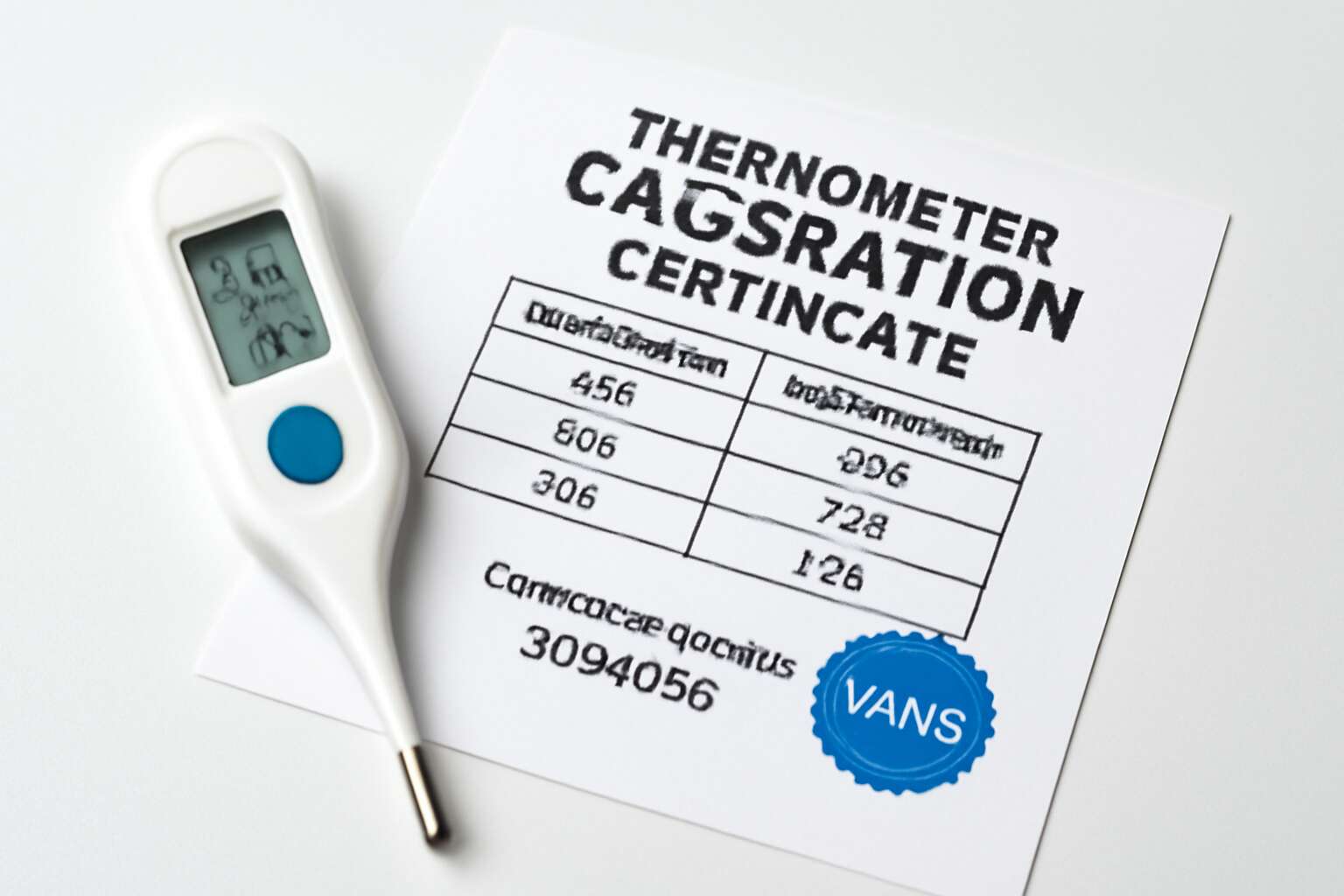
A thermometer calibration certificate is the quiet backbone of reliable temperature control in SA laboratories, clinics, and food facilities. It shows that the instrument has been measured against traceable standards and returned numbers you can trust. The document notes the instrument identity, the calibration method, the reference standard, measured results, and the stated uncertainty.
- Instrument identification and range
- Calibration date and due date
- Reference standard and method used
- Measurement results with uncertainties
- Certificate number and sign-off
To make the certificate actionable, these elements commonly appear. In South Africa’s regulated environments, NMISA traceability often features on the thermometer calibration certificate. That connection to national standards helps audits breathe easier and keeps readings aligned with real conditions.
Who Requires a Calibration Certificate
In SA laboratories, clinics, and food facilities, a single unchecked reading can ripple into faulty decisions. The thermometer calibration certificate acts as a quiet arbiter of trust, translating instrument drift into a record you can rely on. It signals that the device has been measured against traceable standards and deemed fit for purpose, with the spirit of accountability woven between the lines.
Who requires this document? Practically everyone handling regulated temperature-sensitive work in South Africa—from medical labs to manufacturing kitchens. In many environments, NMISA traceability threads through the certificate, easing audits and ensuring readings stay aligned with real conditions.
- Audit readiness and regulatory compliance
- Consistent quality across batches
- Clear, verifiable traceability
That combination of rigor and clarity makes this certificate more than paperwork—it’s a safeguard for trust and safety in every temperature-dependent decision.
Key Information Included in a Certificate
Every degree matters in SA labs, and a single unchecked reading can ripple through a batch. Understanding Calibration Certificates for Temperature Devices reveals the arithmetic behind those readings. A thermometer calibration certificate records not only numbers but how those numbers were produced and why accuracy matters when decisions hinge on temperature. The certificate anchors drift to traceable standards, turning instrument quirks into a trustworthy narrative. In South Africa, many teams value traceability—from NMISA references to calibration dates—because it feeds confidence and accountability into the workflow. I’ve seen audits go smoother when the certificate clearly maps each reading to its standard.
Key information typically included in these documents includes:
- Instrument identification (model and serial number)
- Calibration method and reference standards
- Traceability chain (NMISA or equivalent)
- Measured values, date, and uncertainty
- Acceptance status and notes for adjustment
This structure helps audits stay smooth and readings stay aligned with real conditions.
How a Calibration Certificate Supports Compliance
Across South Africa, compliance rests on a sealed datum—a single value that can steer a production line through the fog of uncertainty. Understanding calibration certificates for temperature devices reveals how numbers are forged into trustworthy stories, where method and traceability shade every reading.
Consider a thermometer calibration certificate; it does more than tally numbers. It anchors measurements to traceable standards and maps uncertainty, so audits find a clear line of evidence.
- Traceability chain to NMISA or equivalent
- Calibration method and reference standards documented
- Measured values, date, and stated uncertainty
- Acceptance status and notes for adjustment
With this tapestry, South African teams breathe easier knowing the certificate backs their decisions, not with bravado but with evidence.
Standards, Compliance, and Regulatory Considerations for Temperature Calibration Certificates
International Standards and Norms (ISO/IEC, ILAC, NIST)
In high-stakes environments, a missing calibration certificate can halt a line and invite audit scrutiny. Standards and regulatory considerations shape a thermometer calibration certificate, ensuring each reading carries traceability and credibility. This certificate is more than paperwork; it is a safeguard for safety and reliability.
Global benchmarks guide labs toward consistent performance. The following standards and norms inform the certificate’s credibility:
- ISO/IEC 17025 — general requirements for calibration laboratories
- ILAC MRA — mutual recognition that supports international acceptance of results
- NIST references — trusted materials and measurement guidance
- SANAS accreditation — South Africa’s mark of credible laboratory capability
Within South Africa’s regulatory landscape, traceability to SI units and clearly stated measurement uncertainty anchor every thermometer calibration certificate. These elements ensure audit readiness, support compliance across industries, and keep the focus on reliability over rhetoric!
Industry-Specific Regulatory Requirements
Compliance isn’t a buzzword here—it’s the safety net. In South Africa, traceability to SI units and clearly stated measurement uncertainty anchor every thermometer calibration certificate. Standards drive every clause—from how results are recorded to audit readiness—and the certificate is a credibility passport you can present under pressure.
Industry-specific regulatory requirements vary by sector, demanding tailored documentation and archival practices that stand up to scrutiny. The specifics differ for healthcare, food and beverage, and manufacturing—yet the common thread is consistent measurement traceability.
- Audit-ready documentation
- Retention and retrieval policies
- Role-based access controls
Regulators and accreditation bodies champion uniformity across labs, ensuring the certificate supports reliable decision-making, smooth inspections, and uninterrupted production.
Traceability, Uncertainty, and Calibration Hierarchy
Standards are not mere etiquette; they are the bedrock of trust in metrology. In South Africa, a thermometer calibration certificate ties every reading to SI units and clearly states measurement uncertainty. That transparency turns volatile temperature claims into auditable, actionable data that supports safety, quality, and regulatory readiness.
Compliance hinges on a disciplined calibration hierarchy that traces every step from the reference thermometer to the device under test.
- Traceability chain to SI units
- Uncertainty budgeting and reporting
- Audit-ready documentation and access controls
Regulatory considerations demand harmonized practices across sectors, ensuring certificates support decision-making during inspections and audits. In practice, that means defined retention policies, role-based access, and periodic proficiency testing to maintain credibility.
Certificate Retention, Audits, and Record-Keeping
“If it’s not written, it’s not trusted,” says a QA manager. In South Africa, a thermometer calibration certificate anchors every reading to SI units and makes measurement uncertainty transparent, turning ambiguity into auditable data that supports safety and regulatory readiness.
Compliance hinges on a disciplined retention and audit regime. Standards-driven record-keeping preserves the certificate through its life, with role-based access, secure archives, and unbroken trails of proficiency testing that bolster credibility across inspections.
- Retention policies aligned with sector-specific regulations
- Role-based access and secure, time-stamped storage
- Comprehensive audit trails and ongoing proficiency testing
- Digital integrity controls and cross-department visibility
Validation of Certificates and Authenticity
In South Africa’s precision-driven sectors, calibration is more than numbers—it’s trust you can measure. A thermometer calibration certificate anchors readings to SI units and makes uncertainty legible, turning foggy data into auditable, regulator-ready evidence that supports safety and efficiency.
Standards-driven compliance requires robust validation of certificates and authenticity. Align with SANAS-accredited laboratories, follow ISO/IEC 17025, and ensure traceability to SI units. Digital integrity—signatures, timestamps, and secure archives—creates a clear audit trail across departments.
- Certificate validation steps and cross-checks
- Tamper-evident seals and digital signatures
- Time-stamped, role-based access to archives
Regulatory considerations extend to cross-border recognition through ILAC MRA, and to sector-specific bodies overseeing health, food, and critical infrastructure. In practice, verification becomes routine—every certificate travels with a validated data package.
The Calibration Process: Methods, Tools, and Best Practices
Choosing Calibration Methods for Temperature Readouts
Across SA facilities, a misread thermometer can derail quality audits faster than a late shipment. Industry audits show up to one in three temperature readouts drift between calibrations, underscoring how precise calibration saves time, waste, and reputations in manufacturing and healthcare alike!
Choosing calibration methods for temperature readouts hinges on device type, range, and required uncertainty. The core tools include reference standards, temperature baths, and dry-block calibrators, all traceable to NMISA and SANAS-accredited labs. A practical mix looks like this:
- Ice-point or fixed-point references for initial checks
- Dry-block or stirred-liquid baths for in-range calibration
- Inter-lab comparisons to confirm consistency
Best practices focus on documentation, repeatability, and transparency. Record the method, conditions, and any drift observed; this is what turns data into a thermometer calibration certificate that stands up to audits.
Reference Standards and Equipment Used
Audits bite back hard when a thermometer misreads. Across SA facilities, up to one in three temperature readings drift between calibrations, turning routine checks into last-minute cardio. The calibration process hinges on solid methods, reliable tools, and disciplined hands to keep data trustworthy.
Key steps and tools ensure consistency:
- Reference standards traceable to NMISA or SANAS-accredited labs
- Temperature baths or dry-block calibrators spanning the device range
- Data loggers and software to capture drift and uncertainty
This creates a thermometer calibration certificate that stands up to audits.
Best practices demand meticulous documentation, repeatability, and transparency: record method, conditions, and drift; maintain chain-of-custody; and archive certificates and raw data for future scrutiny (and a smug smile when the auditors arrive).
Documenting Results: Data, Uncertainty, and Calibration Reports
Across SA facilities, up to one in three readings drift between calibrations, and audits can hinge on a single decimal place. A thermometer calibration certificate anchors trust across the chain and makes that risk manageable. The calibration process rests on solid methods, dependable tools, and disciplined hands that keep readings trustworthy. I’ve seen audits turn on repeatability; capture and transparency matter.
Key elements include:
- Method selection anchored to traceable standards and documented protocols
- Temperature baths or dry-blocks that cover the device range
- Live data capture with software to flag drift and quantify uncertainty
Document results clearly: capture data, quantify uncertainty, and compile calibration reports for future scrutiny.
Common Pitfalls and How to Avoid Them
In SA labs, a single misreading can ripple through a whole batch. The thermometer calibration certificate anchors trust and keeps audits from hinging on a stray decimal. The calibration process rests on solid methods, reliable tools, and disciplined hands that keep readings credible—I’ve seen audits hinge on a single decimal.
Methods should be anchored to traceable standards and documented protocols. Use temperature baths or dry-blocks that cover the device range, and implement live data capture that flags drift and quantifies uncertainty!
Common pitfalls include skipping routine checks, over-reliance on a single reference, and opaque data capture. To avoid them, maintain transparent records, perform cross-verification, and ensure your software flags anomalies in real time.
- Inadequate traceability
- Unrecorded drift between calibrations
- Opaque result documentation
Calibration Frequency and Scheduling Recommendations
The calibration process for temperature readings blends proven methods with diligent tool use to keep results credible. Use procedures tied to nationally traceable standards and ensure coverage of the full device range. Live results let drift be flagged before it becomes a problem, and across SA labs a thermometer calibration certificate sits at the center of trust.
Key tools and practices include temperature baths or dry-blocks that span the device range, paired with a reliable data logger that flags drift and quantifies uncertainty. The following essentials keep audits sane:
- Independent reference checks at defined points
- Transparent, timestamped result documentation
- Automated anomaly alerts and routine software validation
Calibration frequency should be tied to use, criticality, and regulatory demands. A formal schedule, reviewed with QA, ensures the thermometer calibration certificate stays current and auditable. In conservative environments, more frequent checks prevent surprises in downstream results.
Business Value and Practical Applications of Calibration Certificates
Quality Assurance, Compliance, and Risk Reduction
In South Africa’s regulated sectors, studies show that up to 15% of product losses trace to temperature misreadings; a thermometer calibration certificate stands as a quiet guardian of accuracy and trust.
Quality systems benefit from standardised documentation, traceability, and defensible records that simplify audits, training, and cross-site calibration programs, reducing human error and regulatory exposure.
- Supports audit readiness and regulatory conformity across South African norms
- Enables consistent temperature control in manufacturing, healthcare, and hospitality
- Builds stakeholder confidence through verifiable data and supplier qualifications
By aligning methods and reporting with standards, businesses lower risk of product recalls, financial penalties, and reputation damage, safeguarding the trust that keeps communities thriving.
Building Customer Trust with Verified Data
In markets where precision governs safety and margins, a thermometer calibration certificate acts as a quiet contract between manufacturer and buyer. It converts scientific accuracy into business leverage: steadier yields, lower waste, and guardrails against regulatory penalties. Across sectors—from food processing to healthcare—verifiable numbers become a language customers trust!
Practical applications emerge across procurement, production assurance, and customer communications. They translate verification into everyday decisions, supporting supplier qualifications, batch releases, and transparent reporting.
- Enable transparent supplier qualification and audit trails
- Support customer warranties with verifiable performance data
- Streamline cross-site calibration alignment for consistency
With verified data, relationships are cognitive anchors—customers feel assured, audits go smoother, and reputational risk softens like a held breath. The thermometer calibration certificate becomes not a burden but a beacon, guiding procurement, quality teams, and manufacturing floors toward reliable outcomes.
Cost-Benefit Analysis: Calibration vs. Non-Compliance
In South Africa’s precision-driven markets, a single drift can derail a batch and hit the bottom line. “Accuracy pays,” one plant manager often says. A thermometer calibration certificate translates precision into business value—it provides verifiable assurance that measurements stay within spec, time after time.
A cost-benefit lens reveals calibration versus non-compliance. It highlights how calibration reduces waste, protects margins, and supports faster audits, especially when supplier qualifications hinge on reliable readouts.
- Lower waste and fewer reworks
- Quicker supplier qualification and smoother audits
- Stronger customer trust and fewer penalties
Taken together, the business value of a calibration certificate becomes a quiet driver of procurement discipline, production certainty, and transparent reporting across sites. It supports cross-site alignment, audits, and trusted data flows that buyers and manufacturers rely on daily!
Case Studies: Real-World Scenarios Where Certificates Help
In South Africa’s precision-driven plants, a single drift can derail a batch—and margins fade fast. “Accuracy pays,” a plant manager often says. A thermometer calibration certificate translates precision into business value, turning measurement certainty into verifiable performance across shifts and sites.
Across operations, calibration certificates support cross-site alignment, faster audits, and more transparent reporting. They help procurement choose reliable suppliers, reduce waste, and protect customer trust.
- Cross-site data flows that simplify regulatory reviews
- Quicker supplier qualifications with credible readouts
- Lower waste and fewer reworks from consistent temperature tracking
Case studies from small farms to large plants show how evidence of calibration can shift outcomes: a dairy facility trims spoilage, a bakery keeps shipments within spec, and a pharmaceutical pack line preserves shelf stability. In each scenario, the certificate acts as quiet, verifiable proof of performance and compliance.


0 Comments